Running a jewelry business today means managing more than just beautiful inventory. Between supplier catalogs, ecommerce demands, and rising customer expectations, jewelers need smarter technology to keep up.
That’s where JewelCloud comes in. But it’s important to understand not just how it works, but where its strengths and limitations come from.
This guide will explain what JewelCloud is, what it does well, and why the quality of your experience depends entirely on the brands you work with.
What Is JewelCloud?
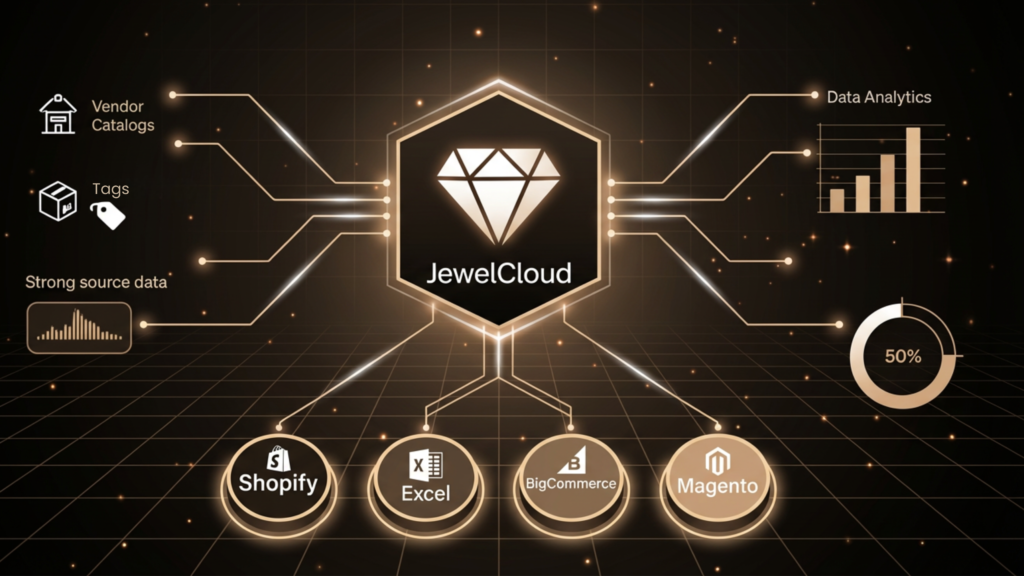
JewelCloud is a B2B digital platform built by GemFind. It connects jewelry retailers, manufacturers, and suppliers by providing real-time product data through a centralized digital feed.
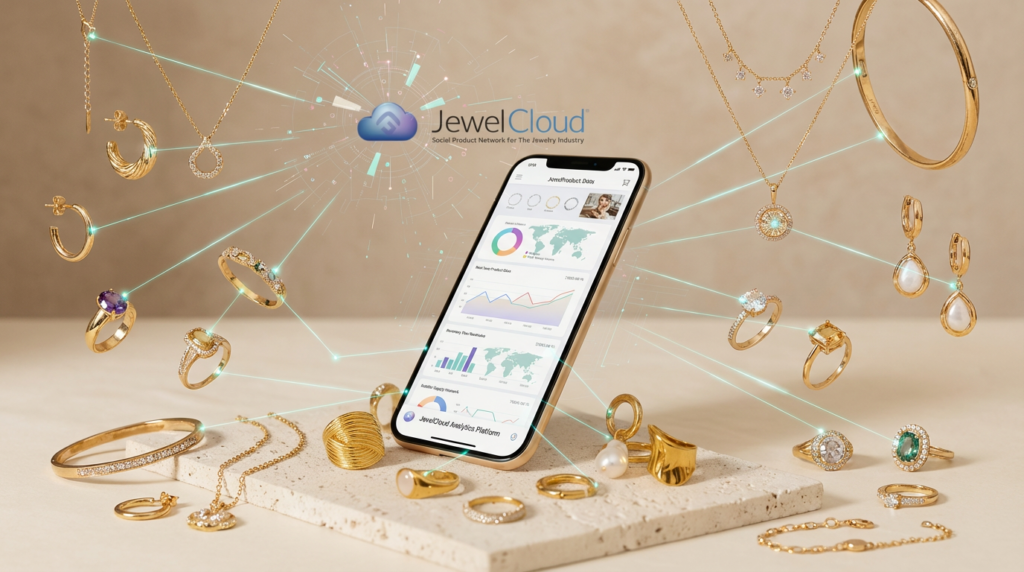
Think of it as a pipeline between your website and your vendors. It pulls in product details, images, pricing, and inventory without requiring manual input from your team.
This can be a good temporary solution if your team doesn’t have the time or budget to keep your product catalog updated manually. It helps you get products live quickly, and can give the illusion of a fully stocked website.
But here’s the truth:
The quality of JewelCloud data depends completely on what the brand provides.
Some brands maintain detailed, high-quality listings with clean images and up-to-date inventory. Others offer outdated, incomplete, or poorly formatted data. As a result, you might end up with product pages that don’t reflect the luxury image your brand is trying to present.
Why This Matters
Customers browsing your site are making split-second judgments based on how polished your product pages look. If you’re relying on vendor feeds from JewelCloud, you’re trusting those brands to do the work right.
When they don’t, it reflects directly on your store.
The biggest issues that come up include:
- Low-resolution or inconsistent product images
- Outdated or missing descriptions
- Inaccurate inventory or pricing
- Generic or duplicate product titles
- Missing metadata or poor formatting
This is not a problem with the JewelCloud platform itself. It’s a problem with how much effort each brand puts into managing their own data within it.
And because many other jewelers are pulling in the same content, using JewelCloud can also hurt your SEO performance. Google prefers unique content, and if dozens of sites are displaying identical titles, descriptions, and image alt tags, you lose your competitive advantage.
Key Features of JewelCloud
Despite these concerns, JewelCloud still offers some strong benefits when used with brands that actively maintain their catalogs.
1. Centralized Product Feed Management
- Access thousands of SKUs from vendors in one dashboard
- Sync photos, pricing, specs, and availability
- Reduce manual updates and save time
2. Real-Time Inventory Syncing
- Show in-stock products accurately
- Hide sold-out or discontinued items automatically
- Minimize customer frustration
3. Brand and Designer Integrations
- Browse product catalogs by brand, category, or price
- Select items that match your store’s style
- Expand offerings without physical inventory
4. Ecommerce Platform Compatibility
- Connects with Shopify, BigCommerce, Magento, and more
- Launch fast using pre-built product data
- Maintain a modern digital storefront
5. Marketing Asset Access (If Provided)
- Use brand-supplied images and specs
- Keep product pages looking consistent
- Avoid the need for in-house photography or copywriting
But again, these features only perform well when the source data is strong.
JewelCloud Works, But Manual Always Wins
Using JewelCloud can be a helpful short-term strategy. It gets your products live and saves time.
However, if you want to stand out online, managing your own product data will always be better.
- You can write unique, SEO-optimized product descriptions
- You can ensure your images meet your brand standards
- You can clean up categories, collections, and filters
- You can track which products actually sell and adjust accordingly
Over time, this level of control is what improves rankings, drives more conversions, and builds customer trust. JewelCloud can help you get off the ground, but it shouldn’t be your long-term solution if you want to compete at the highest level.
Final Thoughts: Use JewelCloud With Eyes Wide Open
JewelCloud is a helpful tool, but it is only as strong as the brands feeding into it. When the data is good, it can streamline operations and help you grow your online catalog quickly. But when the data is poor, it can make your website look sloppy and hurt your search rankings.
If you’re serious about long-term ecommerce growth, you need more than automation. You need strategy, customization, and control.