If you’ve ever misplaced a ring, double-counted a necklace, or realized you sold something you no longer have in stock, you’re not alone.
For many jewelers, inventory management is one of the least glamorous parts of running a business, yet it’s one of the most essential.
Knowing exactly what you have, where it is, and how fast it moves is the foundation of profitable operations. Without it, you’re guessing and in the jewelry world, guessing gets expensive fast.
Let’s break down how to inventory jewelry effectively so you can save time, stay organized, and sell with confidence.
What Does It Mean to Inventory Jewelry Effectively?
When you think of “inventory,” it’s easy to imagine counting pieces in a case. But true inventory management is much more than that.
It means knowing:
- What products you have
- Where they’re located
- What they cost you
- How often they sell
Effective jewelry inventory helps you track materials, manage profit margins, prevent stockouts, and avoid overbuying. For luxury jewelers, it also builds customer trust because accuracy and presentation matter as much as sparkle.
Key Elements of Jewelry Inventory Management
To get a complete picture of your business, your inventory system should track several details for every item.
Here’s what to include:
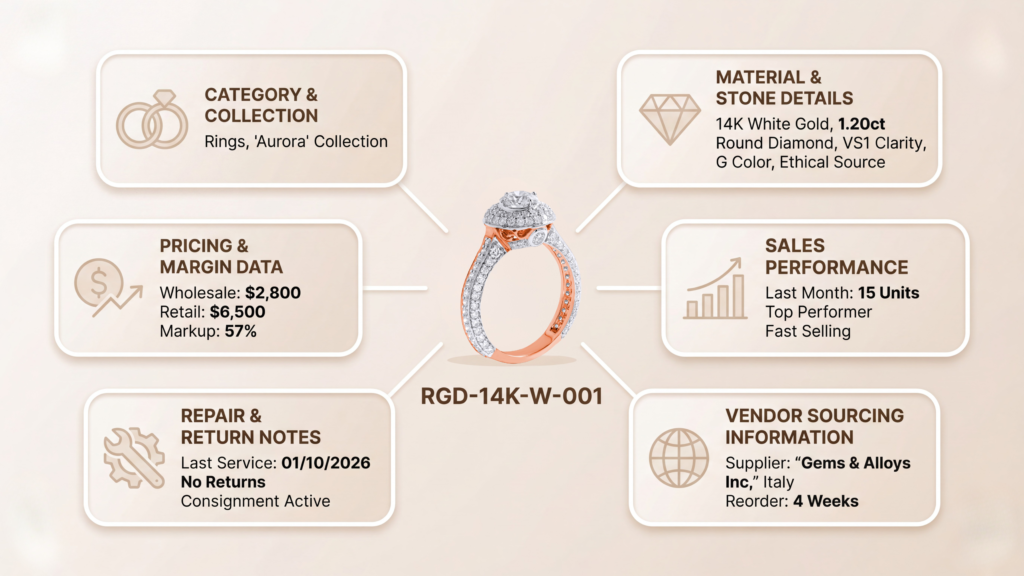
- SKU assignment: A unique identifier for every product, such as “RGD-14K-W-001.”
- Categories and collections: Grouping by type or purpose (e.g., bridal, everyday wear, men’s accessories).
- Materials and stone details: Metal type, stone cut, carat, clarity, and source.
- Pricing and margin data: Track wholesale, retail, and markup values.
- Sales performance: Which products are selling fastest and which need promotion.
- Repair, consignment, and return notes: Essential for managing your asset value.
- Vendor sourcing: Keep records of where each item came from and reorder timelines.
Step-by-Step: How to Inventory Jewelry
Step 1: Choose the Right Inventory Tool
You can manage jewelry inventory using a simple spreadsheet or specialized software.
If you’re just starting out, spreadsheets might work. But as you scale, consider a POS or inventory system like Crystal POS, Clientbook, or JewelCloud. These platforms let you track pieces in real time, connect data with your ecommerce site, and generate reports.
Step 2: Create a Consistent SKU System
Your SKU (Stock Keeping Unit) should make sense at a glance. Include details like product type, material, or gemstone. For example:
“RNG-18K-YG-DIA01” could mean Ring, 18k Yellow Gold, Diamond #01.
Consistency makes it easy to find and cross-reference items, especially if you have staff or multiple locations.
Step 3: Organize Your Physical Inventory
Once your digital system is set up, match it with physical organization.
- Use trays, drawers, or safes labeled by category
- Tag each item with its SKU or barcode
- Keep matching folders or digital records for certificates and appraisals
An organized backroom is just as important as an elegant display case.
Step 4: Digitize Every Product
Add every item into your database with high-quality photos, stone information, weights, and pricing.
Digital records save you time when marketing online or updating insurance values. They also help your sales team provide quick answers during client consultations.
Step 5: Conduct Regular Counts
Even the best systems need checkups.
- Perform full inventory audits quarterly
- Do smaller cycle counts each week for popular or high-value items
- Update records immediately when something is sold, repaired, or transferred
Regular counts prevent discrepancies that can cause confusion during busy seasons.
Tools That Make Jewelry Inventory Easier
Here are a few tools that can simplify your workflow:
- Clientbook: Connects in-store sales and client communication with product data, perfect for luxury retailers
- Crystal POS: Designed for jewelers to manage sales, repairs, and stock across multiple stores
- JewelCloud: A digital catalog system that integrates with websites and wholesalers
- QuickBooks or Xero: Helps track valuation and cost of goods sold (COGS)
- Shopify or WooCommerce inventory apps: Ideal for ecommerce jewelers who need product visibility online
Common Mistakes to Avoid
Even experienced jewelers make errors when it comes to inventory. Watch out for these pitfalls:
- Using spreadsheets only, with no automation or tracking
- Forgetting to update stock after repairs or consignments
- Assigning unclear or inconsistent SKUs
- Failing to train staff on how to record new items properly
- Ignoring analytics that show which pieces are selling best
How ARKTOP Helps Streamline Inventory for Jewelers
At ARKTOP, we don’t just design websites. We build systems that make your business run smoother.
Here’s how we can help:
- Connect your POS or inventory software directly to your website
- Develop consistent SKU systems that sync across platforms
- Create real-time dashboards that show your most valuable items and top sellers
- Automate alerts for low stock or inactive inventory
- Train your team on digital workflows that reduce manual errors
When your inventory and marketing are connected, your operations become faster, cleaner, and more profitable.
Final Thoughts: When You Know What You Have, You Sell Smarter
Inventory might not be glamorous, but it’s what keeps your business strong.
A reliable system saves time, reduces loss, and empowers your team to sell confidently.
Whether you’re managing a single boutique or a national jewelry brand, mastering inventory is one of the best ways to create order, consistency, and growth.