If you’re running Google Ads right now, something big is coming your way this September. The brands that prepare early will have a real edge over those that don’t.
Google has officially moved its AI Max for Search campaigns out of beta, and with it comes one of the most significant shifts in paid search in years. Whether you manage your own campaigns or work with an agency, this update touches every advertiser using Dynamic Search Ads, automatically created assets, or broad match settings at the campaign level.
This is not a minor tweak you can ignore. It’s a platform-wide transition that will change how your ads match to searches, how your ad copy is generated, and where your traffic lands. The good news: real performance upside is there if you set it up correctly. The challenging part: if you wait for the automatic upgrade in September, you lose control over how your account is configured from day one.
By the end of this post, you’ll know exactly what Google’s AI Max is, what’s changing and when, which features matter most for your business, and how to get ahead of it before the deadline hits.
What Is Google’s AI Max, Exactly?
Before diving into what’s changing, it helps to clear up a common misconception.
AI Max is not a new campaign type. It is an optimization layer you can enable within an existing Search campaign, giving Google more control over how your ads match to queries, what headlines and descriptions appear, and which URLs users land on.
Think of it as a set of AI-powered tools that work on top of your current campaigns. You still define your ad groups, write your ads, and choose your keywords. When you turn on AI Max, you’re giving Google permission to go further with those inputs and find opportunities you’d otherwise miss.
Key features include expanded reach through search term matching, tailored creatives via asset optimization, enhanced performance reporting, and additional controls for precision. Those controls include brand settings, location targeting, and text guidelines that keep the AI working within your approved messaging. Automation with guardrails, in other words.
If you’ve been building out your Google Ads strategy over the past year, AI Max is the logical next layer to understand.
Google’s AI Max vs. Dynamic Search Ads: What Actually Changed
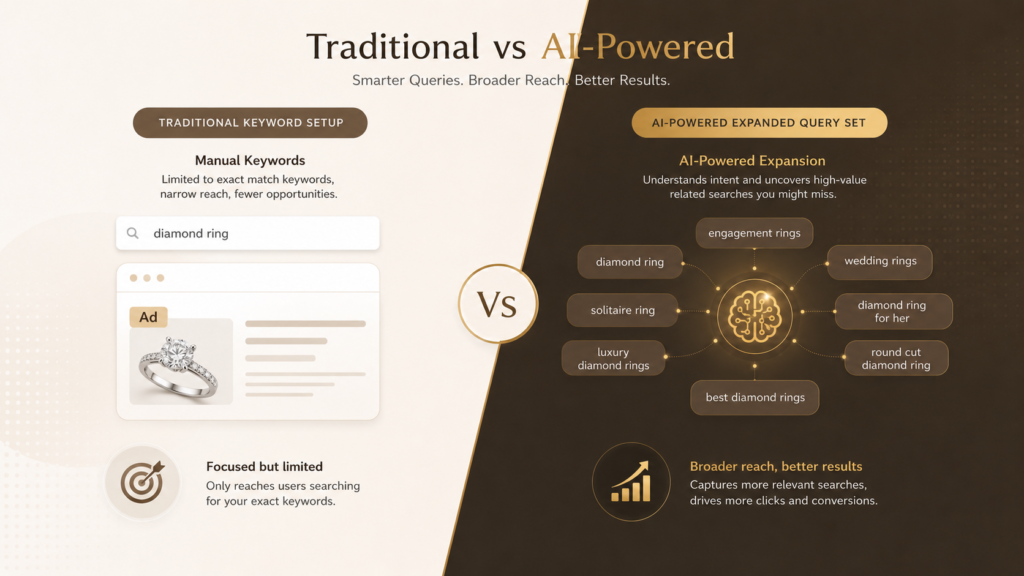
If you’ve been running Dynamic Search Ads for years, you might be wondering how different AI Max really is. The honest answer: it builds on the same foundation, but it goes significantly further.
Dynamic Search Ads were designed to fill the gaps in your keyword lists. Google would crawl your website, match searches to your content, and generate headlines automatically. It was a useful catch-all tool, especially for large catalogs or sites with a lot of pages. But it was limited to what it could learn from your landing pages alone.
As consumer searches become more complex and unpredictable, moving beyond landing page data to include broader, real-time intent signals allows you to connect with customers in the moments that matter most. That’s exactly where AI Max steps in. It takes everything DSA did and layers on richer signals, more creative control, and more transparency into what the AI is actually doing.
Here’s a direct comparison:
| Feature | Dynamic Search Ads | Google’s AI Max |
| Query matching | Based on website content crawl | Website content plus broader real-time intent signals |
| Ad copy generation | Auto-generated headlines from landing pages | Text customization using ads, landing pages, and generative AI |
| Landing page selection | Automatically chosen based on page relevance | Final URL expansion with AI-optimized destination selection |
| Brand controls | Limited | Brand controls, location controls, and text guidelines available |
| Reporting | Standard campaign reporting | Enhanced reporting with search term and creative combination data |
| Compliance tools | Not available | Text disclaimers supported with final URL expansion |
| AI Brief guidance | Not available | Available via Gemini-powered AI Brief tool |
| Shopping support | Not available | Rolling out to Shopping campaigns |
| Future availability | Being deprecated September 2026 | Now the default recommended Search campaign type |
The shift isn’t just cosmetic. DSA relied almost entirely on your website to figure out where to show your ads. AI Max combines advertiser assets, landing page content, and broader intent signals to help match ads to more relevant queries, while adding controls such as brand controls, location controls, and text guidelines.
For jewelers, that distinction is meaningful. A buyer searching for “something meaningful for our 10th anniversary” isn’t using a keyword you’d ever bid on manually. But that search has real purchase intent behind it. AI Max is designed to find those moments. DSA, on its own, was not built to reach that far.
The controls are also a significant upgrade. With DSA, you had limited ability to steer what the AI did with your brand. With AI Max, you can set text guidelines, exclude specific terms, define brand rules, and use AI Brief to guide messaging in plain language. That’s the difference between automation that runs on its own and automation that works within your brand standards.
If you want to understand how this fits into a broader search engine marketing strategy, it’s worth thinking about AI Max not as a replacement for good campaign structure, but as a smarter layer on top of it.
What’s Changing in September 2026
Here’s the part every jeweler and luxury brand running paid search needs to know.
Starting in September, eligible campaigns using Dynamic Search Ads, automatically created assets, and campaign-level broad match settings will automatically upgrade to AI Max. Beginning in September, advertisers will no longer be able to create new DSA campaigns through Google Ads, Google Ads Editor, or the Google Ads API.
That’s a hard deadline, not a suggestion.
There is no formal opt-out. Migration is mandatory for eligible campaigns. The only real lever is voluntary early migration for control over default feature selection.
Why does that matter? Because the default settings that apply during an automatic upgrade are not always the most conservative. DSA users will have all three AI Max features enabled by default: search term matching, text customization, and final URL expansion. If those features aren’t set up intentionally around your brand, your ads could appear in places you didn’t plan for, send traffic to pages you didn’t choose, and generate copy that doesn’t quite match your voice.
Here’s a quick look at how each legacy campaign type maps to AI Max defaults:
| Legacy Feature | Automatic AI Max Default Settings |
| Dynamic Search Ads (DSA) | All three features on: search term matching, text customization, final URL expansion |
| Automatically Created Assets (ACA) | Two features on: search term matching and text customization |
| Campaign-level Broad Match | Search term matching enabled by default |
The brands that migrate early get to set up AI Max on their terms. Those that wait get Google’s defaults. For a comprehensive look at how Google Ads works for jewelry stores, our Google Ads for jewelry guide is a strong place to start.
The Three Core Features of Google’s AI Max
Understanding what each feature does helps you decide how to configure it for your account.
Search Term Matching
This expands your reach beyond your existing keyword list using Google’s AI. Google AI learns from your current keywords, creative assets, and URLs to help you show up on more relevant searches. For jewelers, this means reaching buyers searching for terms you might not have thought to target: occasion-based searches, style descriptions, or material comparisons.
Text Customization
Formerly called automatically created assets, this feature handles ad copy generation. It uses text from your existing ads, landing page copy, and generative AI to create customized headlines and descriptions that are more relevant to a user’s search. You can set text guidelines to exclude certain words or restrict messaging, which matters when your brand has specific language standards.
Final URL Expansion
Rather than always sending users to the same landing page, this feature automatically routes traffic to the most relevant page on your site based on search intent. Pair this with a strong approach to conversion rate optimization and the combination becomes a meaningful revenue driver.
The performance numbers back it up:
| Advertiser Type | Typical Performance Lift with AI Max |
| All advertisers using full AI Max suite | 14% more conversions or conversion value at similar CPA/ROAS |
| Campaigns using exact and phrase match keywords | Up to 27% more conversions or conversion value |
| Full suite vs. search term matching alone | 7% more conversions or conversion value |
Source: Google internal data, 2026
What’s New as of April 2026
Google didn’t just take AI Max out of beta and call it a day. To celebrate one year of AI Max, Google announced new ways to steer performance and is expanding the power of AI Max to more advertisers.

Here’s what’s been added:
- AI Brief (powered by Gemini): A plain-language tool that lets you guide campaign messaging and audience targeting before campaigns go live. Advertisers can define messaging rules, specify which queries to prioritize or avoid, and shape how different audiences are addressed. For luxury brands with carefully crafted positioning, this is a meaningful development.
- Shopping campaign expansion: AI Max for Shopping campaigns lets retailers meet shoppers’ intent before they even search for specific product details, using Merchant Center feeds to transform product data into dynamic Shopping ads that answer conversational queries. For jewelers running Google Shopping campaigns, this is worth paying close attention to.
- Text disclaimers: Final URL expansion now supports mandatory text disclaimers to keep your ads compliant. A long-overdue addition for brands operating in regulated or compliance-sensitive categories.
These updates signal that Google is treating AI Max as a foundational layer across the entire platform, not just a Search feature.
What This Means for Luxury Jewelers
If your store runs any form of PPC campaigns for brand visibility, this transition requires your attention. In the luxury jewelry space, brand voice, audience precision, and landing page experience all directly affect whether an ad click becomes a sale.
AI Max can help you reach buyers earlier in their journey, particularly those using longer, more conversational searches. But it also introduces variables that need to be managed:
- Which URLs Google selects for your traffic
- What copy gets generated on your behalf
- Which search queries your ads appear on
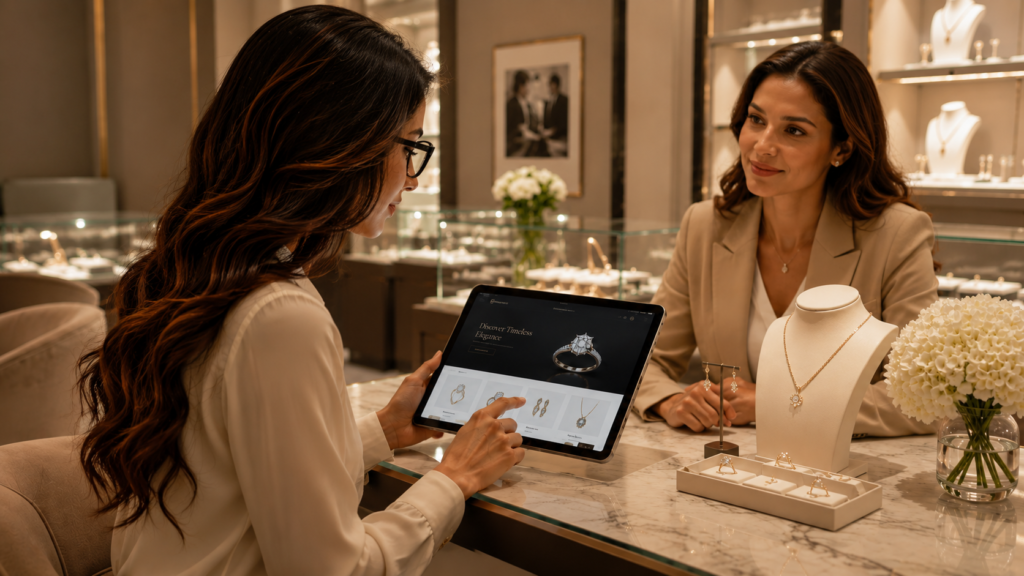
Without proper setup, those variables can work against a premium brand experience.
This is also a good moment to reassess your performance marketing strategy as a whole. AI Max works best alongside strong first-party data, well-structured landing pages, and clear conversion goals. If any of those foundations are soft, the automation has less to work with and your results will reflect that. Our guide on digital marketing for jewelry is a useful starting point for thinking through the bigger picture.
How to Prepare Before September
You don’t need to wait for Google to make this change for you. Here’s where to focus your energy now:
- Audit your current campaigns. Identify which ones use Dynamic Search Ads, automatically created assets, or campaign-level broad match. Those are the campaigns in scope for the automatic upgrade.
- Migrate on your own timeline. Voluntary upgrade tools are available now. Moving early means you control your default feature settings rather than inheriting Google’s.
- Set up your controls first. Before enabling AI Max, configure your brand controls, location settings, and text guidelines. Decide which features you want active from day one.
- Benchmark your performance now. Export your current campaign data before any changes. You’ll need those numbers to measure ROI accurately after the transition.
- Test before committing fully. Google offers one-click experiment tools that let you compare AI Max performance against your existing setup before rolling it out account-wide.
If managing this transition alongside everything else your business demands feels like a lot, working with a team that specializes in luxury Google Ads management or luxury PPC management can make a real difference in how cleanly it goes.
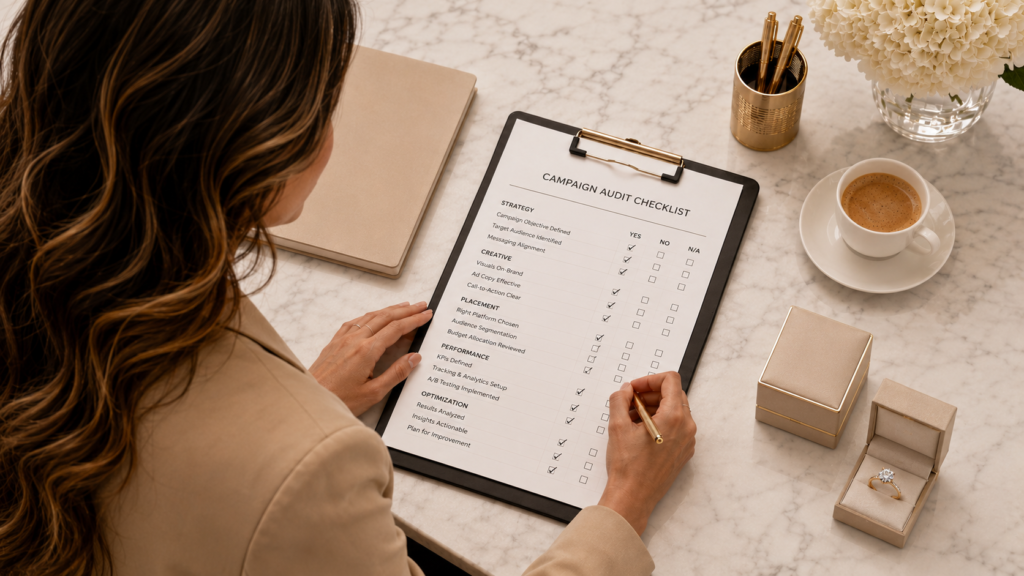
Google’s AI Max upgrade is not something to file away for later. September will arrive faster than it feels right now, and the brands that understand the change, configure their accounts intentionally, and test early will be in the best position when the automatic migration hits everyone else.
Paid search is evolving quickly. Staying ahead of it is part of what separates jewelry stores that grow online from those that plateau. If you’d like a second set of eyes on your current campaign setup or want to build a strategy around this transition, reach out to ARKTOP and let’s talk through what makes sense for your brand.
Frequently Asked Questions
What is Google’s AI Max for Search campaigns?
Google’s AI Max is a suite of AI-powered features that layers onto existing Search campaigns within Google Ads. It is not a new campaign type. It expands your keyword reach, generates customized ad copy, and optimizes landing page selection automatically, all while giving advertisers controls to guide how the AI behaves.
When will Dynamic Search Ads be upgraded to AI Max?
Google has confirmed that eligible campaigns using Dynamic Search Ads, automatically created assets, and campaign-level broad match settings will be automatically upgraded to AI Max starting in September 2026. New Dynamic Search Ads creation will be blocked at the same time. Voluntary upgrade tools are available now for advertisers who want to migrate on their own schedule.
Can I opt out of the AI Max upgrade?
There is no formal opt-out. The migration is mandatory for eligible campaigns. The best way to maintain control over your setup is to migrate voluntarily before September, which allows you to choose your default feature settings rather than inheriting Google’s automatically assigned defaults.
Will AI Max improve my ad performance?
According to Google’s internal data, advertisers using the full AI Max feature suite typically see 14% more conversions at a similar cost-per-acquisition or return on ad spend. For campaigns previously relying on exact and phrase match keywords, the lift can reach 27%. Results vary depending on account structure, campaign goals, and how intentionally the features are configured.
What is AI Brief and how does it work?
AI Brief is a Gemini-powered tool within AI Max that lets advertisers steer campaign messaging using natural language. You can describe your business, define what you want your ads to say, and specify which audiences you want to reach. The system generates ad previews for your review before campaigns go live, giving you more input into how automated content represents your brand.
How should jewelry stores prepare for the AI Max transition?
Start by auditing which campaigns use Dynamic Search Ads, automatically created assets, or campaign-level broad match. Migrate voluntarily using Google’s upgrade tools so you can configure your settings intentionally. Set brand controls and text guidelines before enabling features, export your current performance data for benchmarking, and use Google’s experiment tools to test AI Max before rolling it out fully across your account.