You built your reputation on carrying the right names. Then you launch a paid campaign, feature a brand you’re authorized to sell, and a week later your brand rep is on the phone asking you to pull it down.
The brands you represent have spent decades controlling how their products appear in the world, and that control extends to your Google Ads account, your Instagram grid, and the product pages on your site. Most dealers learn the boundaries the hard way, one correction at a time.
This piece walks through the advertising restrictions authorized dealers commonly encounter, what tends to be permitted, and where the real growth opportunities sit once you know exactly where the lines are. One important note before you read further: dealer agreements are confidential documents that differ by brand, by market, and sometimes by individual dealer. Treat everything here as a map of common industry practice, then verify the specifics against your own agreement and your brand representative.
Why Authorized Dealer Advertising Guidelines Exist in the First Place

Luxury houses treat their brand presentation as a core asset, not a marketing detail. A watch or a piece of fine jewelry carries a price that depends heavily on perceived scarcity, consistency, and prestige. Every uncontrolled ad chips away at that.
The reasoning behind most restrictions comes down to a few concerns:
- Price integrity. Discount messaging on a luxury product signals softness in demand and invites cross-market price shopping. Where a brand operates a minimum advertised price policy, this is the mechanism enforcing it.
- Visual consistency. A brand spends heavily on photography and campaign direction. Dealer-shot images that miss the mark dilute that work.
- Channel control. Brands decide where their names appear. An unauthorized marketplace listing or a poorly targeted display placement undercuts that decision.
- Fair competition among dealers. If one dealer bids aggressively on brand terms, every other dealer in the network pays more to defend their own territory.
Once you see restrictions as network protection rather than obstruction, the specific rules make more sense. You’re not being limited for the sake of it. You’re being kept inside a system that protects your margins alongside everyone else’s.
Rolex Marketing Rules for Jewelers: What Dealers Commonly Cannot Do
Rolex is the most frequently cited example because its dealer network is large, visible, and known for consistent enforcement. The patterns below show up across many luxury houses, not just one.
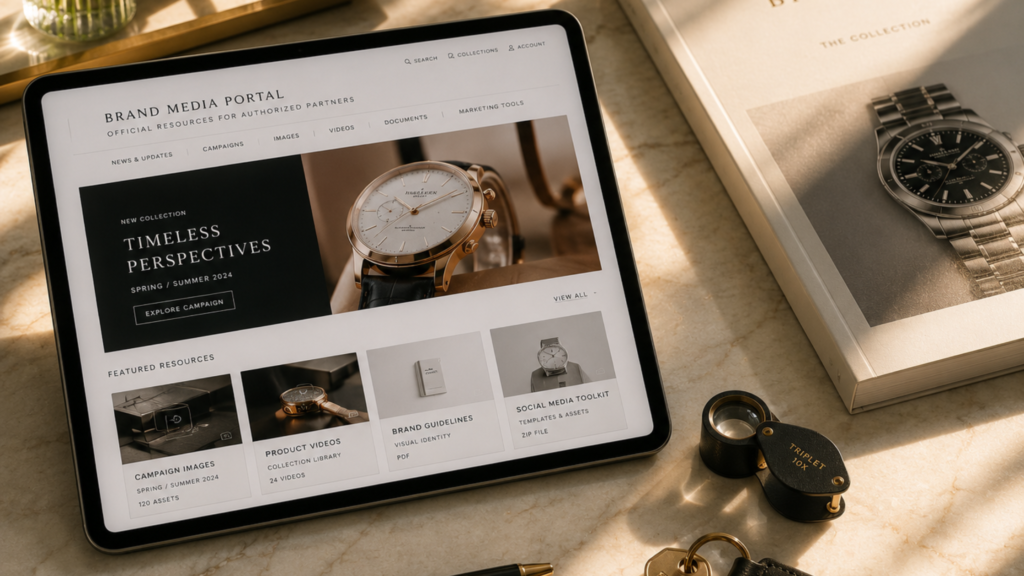
A few Rolex-specific mechanics are worth understanding, because they shape what’s left for you. The brand’s own dealer locator absorbs the majority of brand-name search intent, which is part of the reasoning behind keeping dealers off those terms in paid search. Product creative flows through the official media portal rather than your own camera, which is why asset rules tend to be enforced more consistently here than elsewhere. And the Certified Pre-Owned program gave participating retailers a defined framework for advertising pre-owned inventory that simply did not exist before it launched, with its own asset and messaging requirements attached. If you are CPO-certified, that is the one area where brand-adjacent product advertising has recently opened up rather than tightened.
Restrictions authorized dealers commonly encounter:
- No paid search bidding on the brand name. Brand terms are typically reserved for the brand’s own campaigns and its official dealer locator.
- No use of the brand name in ad headlines or display URLs for paid campaigns, even when the landing page is a legitimate dealer page.
- No discount, sale, or promotional language attached to the brand’s products. That includes percentage-off framing, bundled offers, and financing messaging positioned as a deal.
- No dealer-created product photography. Most brands require approved assets only, supplied through the brand’s dealer portal.
- No third-party marketplace listings. Selling brand products through general marketplace channels is usually a direct violation.
- No stock or availability claims in advertising, particularly for allocated models.
- No comparison advertising that places the brand against a competitor.
- No use of brand trademarks in your domain, social handles, or logo lockups without written approval.
What Authorized Dealers Can Still Run Online
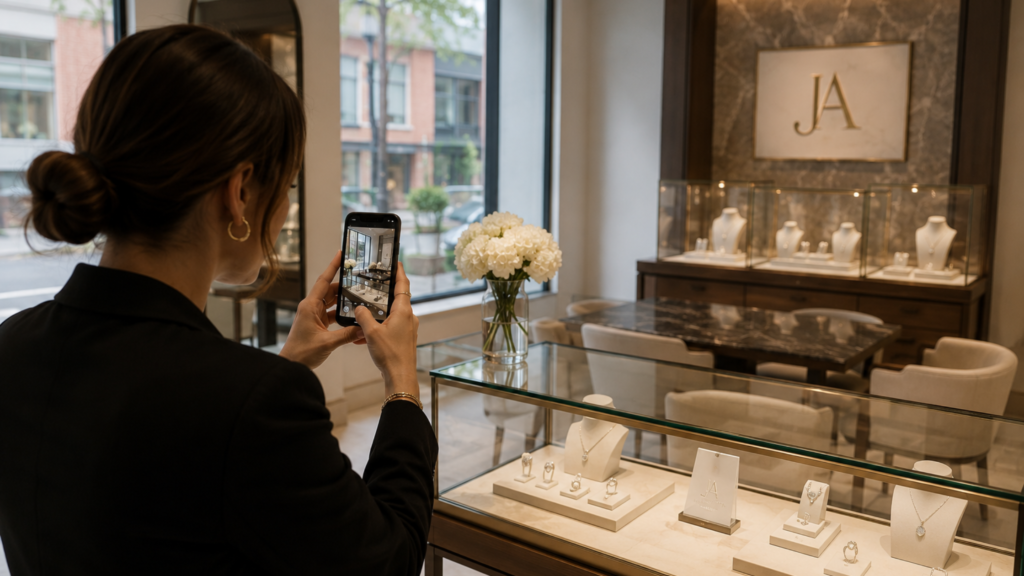
The restricted zone is narrower than it feels, and the permitted zone is where the durable growth lives. Most dealers underestimate how much of it is open to them.
Generally permitted, subject to your agreement:
- Non-branded paid search. Terms like “luxury watch dealer near me,” “certified pre-owned watches,” or “fine jewelry store” are yours to compete for.
- Approved brand assets in organic social. Most brands supply campaign imagery specifically so dealers can post it. Our guide to luxury jewelry social media marketing covers how to build a feed around supplied assets without it looking like a repost account.
- Store-level content. Your showroom, your team, your service department, and your history are entirely yours to promote.
- Local SEO and Google Business Profile. This is the highest-value channel for most authorized dealers, and it sits almost entirely outside brand restrictions. A focused local SEO strategy captures the searcher who already wants the brand and needs to find a dealer.
- Email marketing to your own list. Brand asset rules still apply to the creative, but the channel itself is generally open.
- Service and repair advertising. Often less restricted than product advertising, and frequently underused.
- Educational content. Buying guides, movement explainers, and care advice build authority without touching brand advertising rules.
- Co-op advertising funds. Many brands make advertising dollars available to their dealer network, with creative and placement requirements attached. If you are not drawing on yours, you are self-funding growth your agreement has already budgeted for.
Advertising Compliance by Channel: What’s Restricted and What Isn’t

Every channel carries its own version of the same problem. Use the breakdown below as a starting audit rather than a rulebook.
| Channel | Typically Restricted | Typically Permitted | Watch For |
| Google Search Ads | Bidding on brand terms, brand name in headlines or display URL | Non-branded category and local intent terms, service keywords | Broad match pulling in brand queries you never added |
| Google Shopping | Listing brand products, brand-name feed titles | Non-restricted inventory and in-house lines | Feed rules that auto-populate brand names |
| Meta Ads (Facebook and Instagram) | Dealer-shot brand imagery, promotional or discount copy | Store-level brand awareness, approved assets where permitted, service campaigns | Dynamic creative pulling unapproved product images |
| Organic Social | Editing or filtering supplied brand assets, unapproved product shots | Approved campaign assets, store content, team and community posts | Third-party content reshared without checking rights |
| Website | Brand trademarks in domain, unapproved product imagery, pricing displays where restricted | Dealer status pages built to brand spec, approved collection pages | Legacy pages from before your current agreement |
| Discount framing on brand products, unapproved creative | List-owned communication, appointment and event invitations | Templates carrying old promotional language | |
| Marketplaces | Listing brand products on general marketplaces | Little to nothing brand-related under most agreements | Staff or partners listing inventory independently |
Where Google Ads Puts Authorized Dealers at Risk

Paid search is where most dealers get into trouble, and usually by accident rather than intent. Most authorized dealer digital marketing restrictions that end up enforced start life as an account setting nobody revisited.
The common failure points:
- Broad match keywords quietly capturing brand searches you never intentionally targeted.
- Dynamic search ads generating headlines pulled from page content that includes brand names.
- Performance Max and other automated campaign types, where asset generation and keyword control are limited by design, and where brand terms surface in the search terms report after the fact rather than before.
- Legacy campaigns built under an older agreement and never revisited.
A clean setup means tight match types, aggressive negative keyword lists covering every brand term and misspelling, and manual review of any automated headline. Our Google Ads guide for jewelers walks through the account structure that keeps this manageable.
If you’d rather not audit this yourself, our luxury Google Ads management team builds accounts inside dealer restrictions from the outset.
Building a Compliant Strategy That Still Grows Revenue
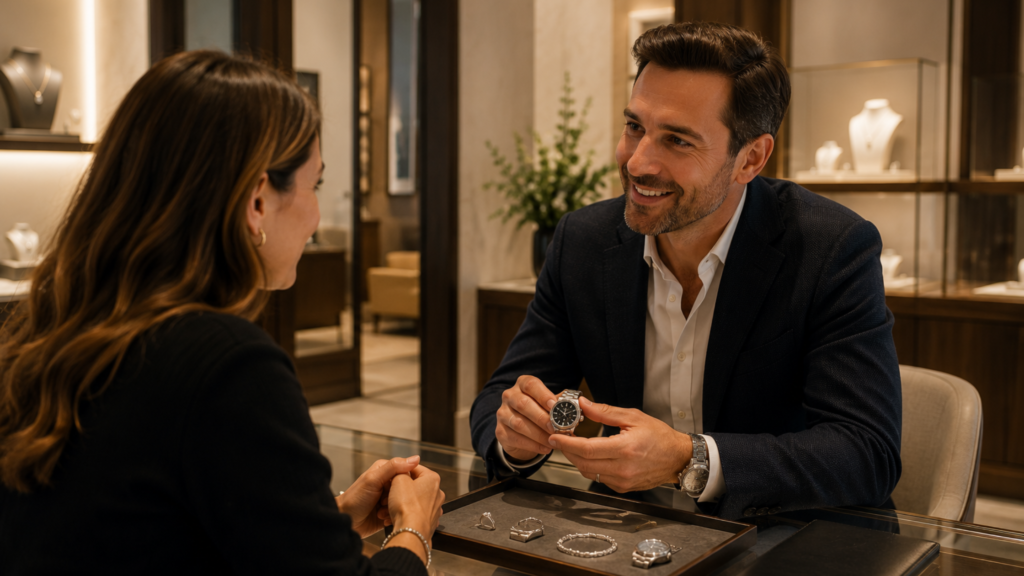
The dealers who perform best stop treating compliance as a limitation and start treating it as a strategic filter. If your competitors are restricted from the same channels you are, then the open channels are where competitive advantage is actually decided.
What that looks like in practice:
| Priority | Why It Works Under Restrictions |
| Local SEO and Google Business Profile | Captures brand-intent searchers at the dealer-locator stage without paid brand bidding |
| Service and repair marketing | Usually the least restricted category, and it drives repeat foot traffic |
| Store-level brand equity | Your own name carries no brand restrictions and compounds over time |
| Educational and editorial content | Ranks for research-phase queries and builds authority with no asset restrictions |
| Email and client relationships | Owned audience, no bidding competition, no platform gatekeeping |
| Co-op advertising funds | Brand-funded budget you are already entitled to, spent inside approved creative rules |
| Events and brand moments | Approved brand activity that generates legitimate promotional windows |
The logic is worth sitting with. Brand restrictions apply to every dealer in the network identically, which makes the restricted channels neutral ground where nobody can pull ahead. The open channels are the only place real differentiation is possible. A dealer investing in local search, service marketing, and an owned audience while competitors wait for permission to advertise product is building an advantage that no agreement can revoke.
Brand-controlled moments deserve attention as well. Major industry events give dealers a rare permitted window for brand-adjacent promotion, and our Watches and Wonders paid ads guide breaks down how to prepare for one.
Dealers who need help managing the relationship itself, not just the campaigns, often start with our luxury brand management services.
Marketing Inside Your Brand Agreements
Working within authorized dealer advertising guidelines takes a partner who already knows where the lines sit. ARKTOP has spent years building campaigns for authorized dealers across luxury watch and fine jewelry retail, including stores operating under some of the strictest brand agreements in the industry.
Schedule a consultation with ARKTOP and we’ll audit your current setup, flag the risks, and show you which channels are actually open to you.
Related Reading
- Facebook ads for jewelry brands — the same compliance discipline applied to paid social.
- Luxury Facebook Ads management — managed paid social built around dealer restrictions.
- Luxury brand marketing — broader positioning work for luxury retail.
- Watch marketing — building equity in your own name within the watch category.
Frequently Asked Questions
Can authorized dealers bid on Rolex as a Google Ads keyword?
Most dealer agreements prohibit bidding on the brand name in paid search. Brand terms are typically reserved for the brand’s own campaigns and its official dealer locator. Check your specific agreement, and build negative keyword lists that cover the brand name and its common misspellings so broad match doesn’t capture those searches unintentionally.
Can authorized dealers use their own photos of luxury brand products?
Usually not. Most luxury houses require dealers to use approved assets supplied through a brand portal, and dealer-created product photography is one of the most commonly enforced restrictions. Some brands allow limited in-store or lifestyle imagery with prior written approval, so ask your representative before shooting anything.
Can authorized dealers advertise pre-owned or vintage models of a brand they carry?
It depends on the brand and on whether you participate in a formal certified pre-owned program. Rolex Certified Pre-Owned, for example, gives participating retailers a defined framework for advertising pre-owned inventory, with its own asset and messaging requirements. Outside a structured program, advertising pre-owned or vintage pieces from a brand you are authorized to sell sits in a gray area worth clearing with your representative first.
What happens if a dealer violates advertising guidelines?
Consequences range from a request to remove the content, to formal warnings, to allocation impacts or agreement review in serious or repeated cases. Most brands start with a correction request rather than a penalty. The bigger risk for most dealers is the relationship damage, not a single takedown notice.
Are luxury brand advertising restrictions the same for every dealer?
No. Dealer agreements vary by brand, by market, and sometimes by individual dealer based on tenure and status. Two stores carrying the same brand in different countries can operate under noticeably different terms, which is why verifying against your own agreement matters more than following general guidance.
Can authorized dealers advertise watch or jewelry repair services?
In most cases, yes, and it’s frequently underused. Service and repair advertising typically faces fewer restrictions than product advertising, since it promotes your capability rather than the brand’s merchandise. Keep brand names out of the ad copy unless your agreement explicitly permits it.
What is the best marketing channel for an authorized dealer?
Local SEO and Google Business Profile deliver the strongest return for most authorized dealers. They capture searchers who already want the brand and need to find a dealer, and they sit almost entirely outside brand advertising restrictions. Email and service marketing follow closely for the same reason.