Ask a jeweler what their agency did for them five years ago and you’ll usually hear the same answer: ran some ads, posted on social, sent a monthly report. Ask the same question today and the answer sounds different. Advertising agencies and digital marketing have moved from a set of separate services into a single connected system, and the brands seeing the strongest returns are the ones treating it that way.
The shift isn’t cosmetic. Search results now answer questions before anyone clicks. Your buyer discovers a bracelet on a phone screen and finishes the purchase in your showroom two weeks later. Budgets that once flowed neatly into one channel now have to prove themselves across six.
Here’s what’s actually changing, why it matters for luxury retail, and what to look for in a partner who can keep up.
How Advertising Agencies and Digital Marketing Are Converging
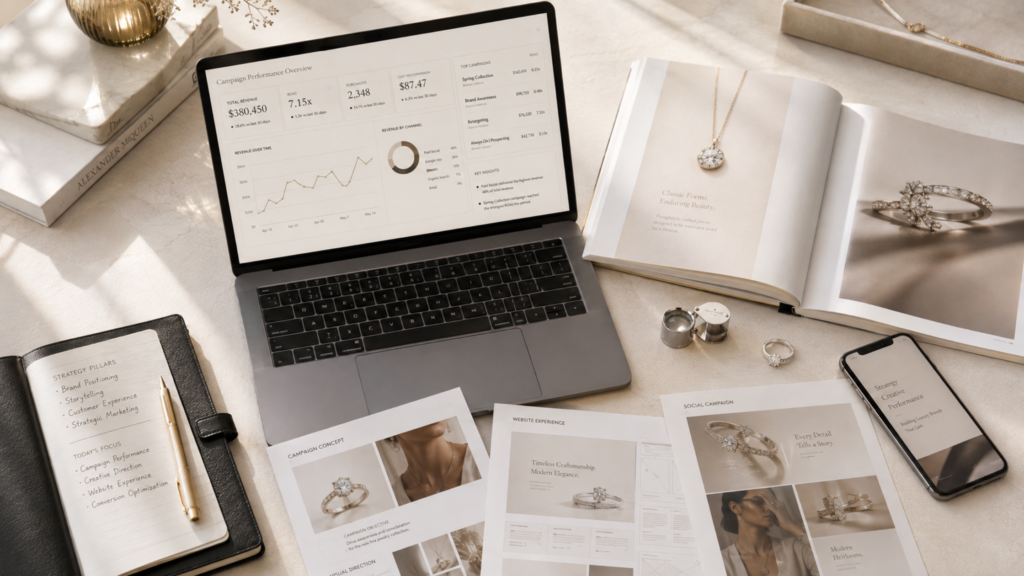
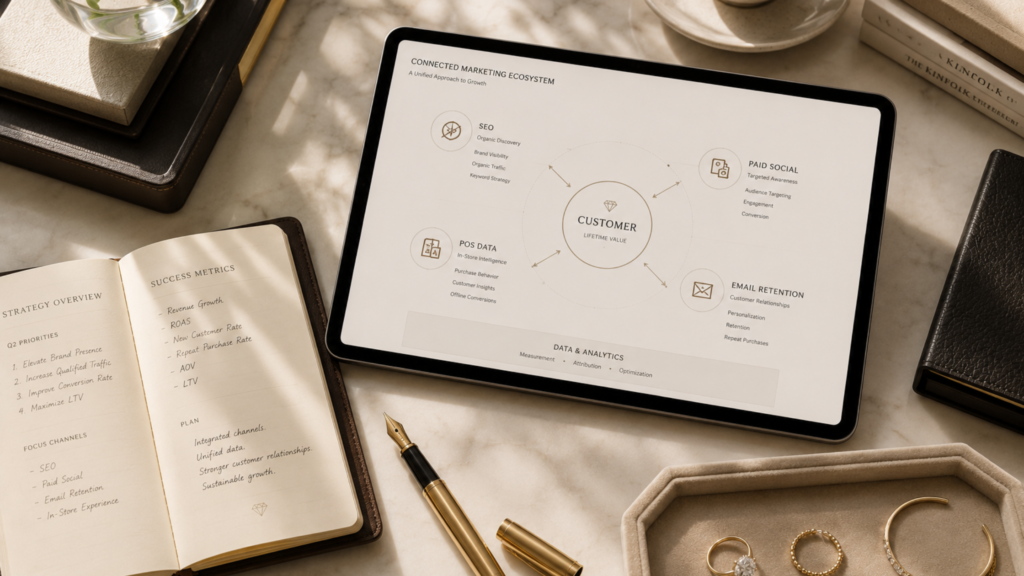
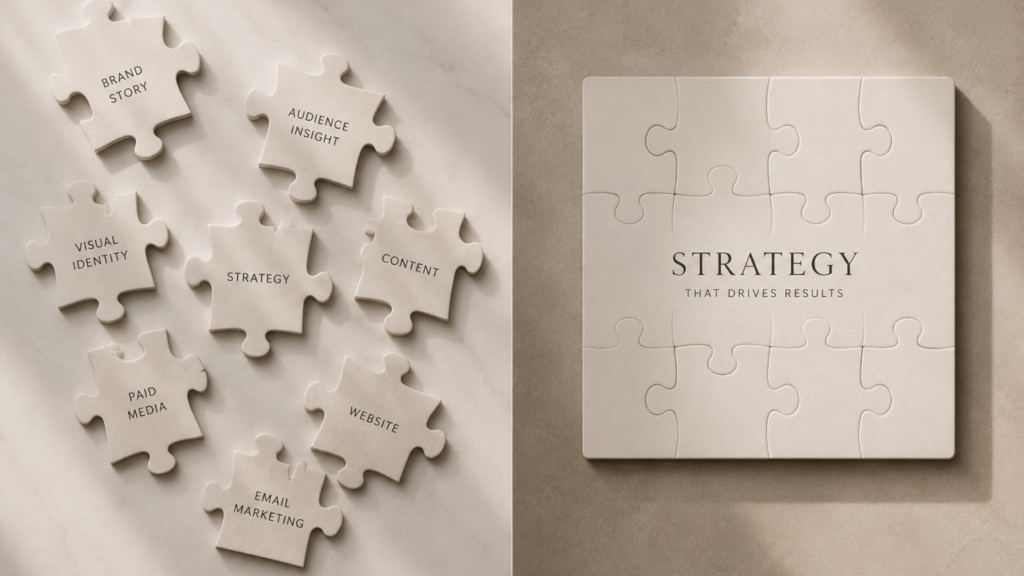
The clean line between “advertising” and “digital marketing” has mostly dissolved. Media buying, SEO, web development, and CRM all pull from the same customer data and feed the same revenue number, so keeping them in separate silos creates friction that shows up directly in your cost per acquisition.
That’s why more luxury brands are consolidating with a full-service marketing partner rather than stitching together specialists:
- One data source. Ads, site behavior, and email activity inform each other instead of contradicting each other.
- Faster iteration. A creative insight from a paid campaign can reach your product page within days.
- Cleaner accountability. When one team owns the funnel, there’s no debate over which channel deserves credit.
- Consistent brand control. Your luxury positioning survives intact across every touchpoint.
For jewelers specifically, this matters more than in most categories. High-consideration purchases involve long research windows, and a fragmented message loses buyers somewhere in the middle. There are real benefits of hiring a digital marketing agency that go beyond execution, and consolidation is now one of the biggest.
Paid Media Trends: Automation With a Human Hand on the Wheel
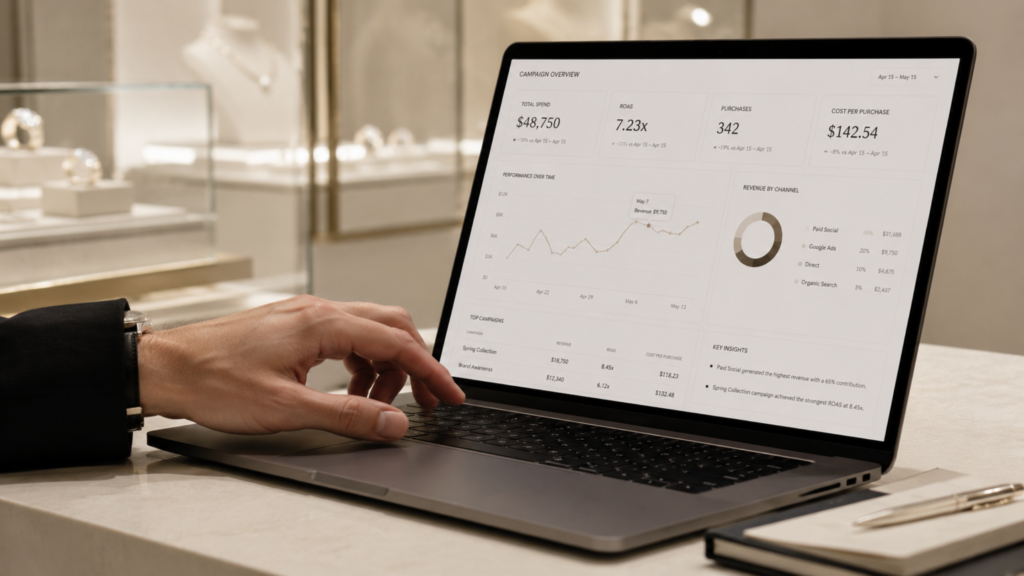
Platform automation keeps expanding. Broad match, smart bidding, and asset-based campaign types now handle decisions media buyers used to make manually, and the platforms are genuinely good at optimization when they’re fed the right inputs.
The current paid media trends worth acting on:
- Creative is the new targeting lever. With audience controls loosening, the ad itself does most of the qualifying work.
- Feed quality drives Shopping performance. Titles, attributes, and product imagery now influence delivery as much as bids do.
- Incrementality beats last-click. More brands are measuring what advertising actually added, not just what it took credit for.
- Budget flexibility by season. Bridal, holiday, and brand-event windows justify sharp spend concentration instead of flat monthly pacing.
Google has long cited an average of roughly $2 in revenue for every $1 spent on Google Ads, but that average hides enormous variance. The difference between brands sits almost entirely in creative quality and account structure, which is where disciplined luxury PPC management earns its keep. As platform costs climb, many jewelers are also expanding into broader performance marketing tactics beyond search and social.
Short-Form Video Marketing and the Rise of Social Commerce
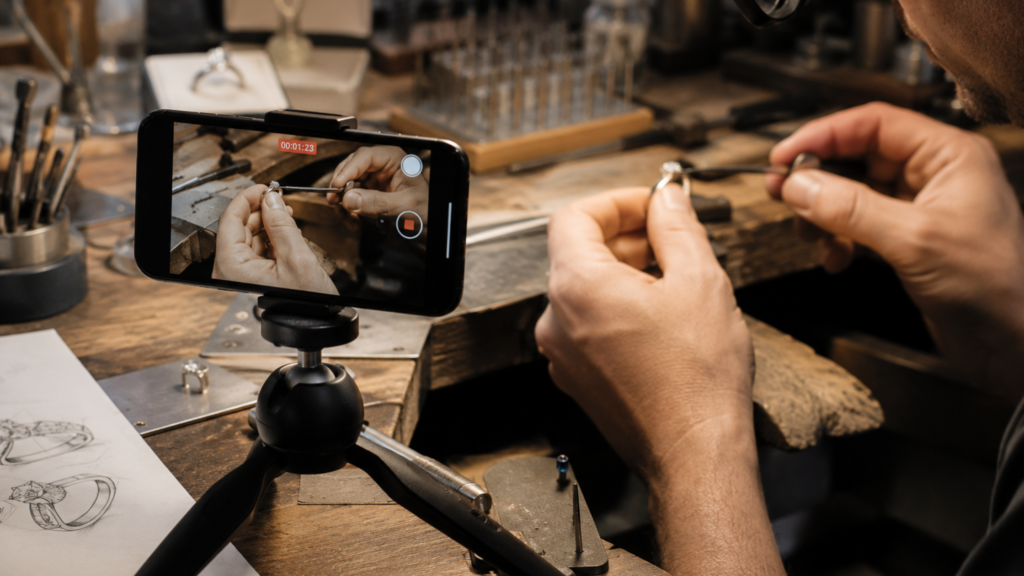
Static product photography still has a place, but discovery now happens in motion. Short-form video has become the default format for reaching buyers who aren’t actively searching yet, and luxury brands that resisted it early are now building video-first content calendars.
What’s working for jewelers right now:
- Craft and process footage. Setting a stone, polishing a case, sizing a band. Quiet, tactile, no voiceover required.
- In-house faces. Your gemologist or store manager outperforms a hired model on trust signals.
- Client moments. Proposals, anniversary pickups, and repair reveals, always shared with permission.
- Native shoppable formats. Product tags and in-app checkout shorten the distance from interest to order.
That last point is the real story. Social commerce has matured from an experiment into a legitimate revenue line, and understanding why social commerce is important is now part of basic retail strategy. Executing it well takes more than posting frequently, which is where luxury social media marketing shifts from an awareness play to a sales channel.
Search Visibility When AI Answers the Question First
Search results increasingly resolve a query without sending anyone to a website. For jewelers, that changes what “ranking” is worth. Being cited inside an AI-generated answer now carries real value, and the pages earning those citations tend to share the same traits: clear structure, specific answers, and demonstrable expertise.
Practical adjustments:
- Write pages that answer one question directly and completely
- Use structured headings and clean markup so machines can parse your content
- Publish original data, pricing context, or expert perspective that can’t be paraphrased from elsewhere
- Keep your business information consistent across every profile and directory
Traffic volume is becoming a weaker success metric than traffic quality. If you want a technical starting point, our guide to whether your site is readable by AI covers the structural work first. A luxury SEO program built for this environment optimizes for qualified visits and brand mentions rather than raw sessions.
First-Party Data Strategy and Marketing Attribution
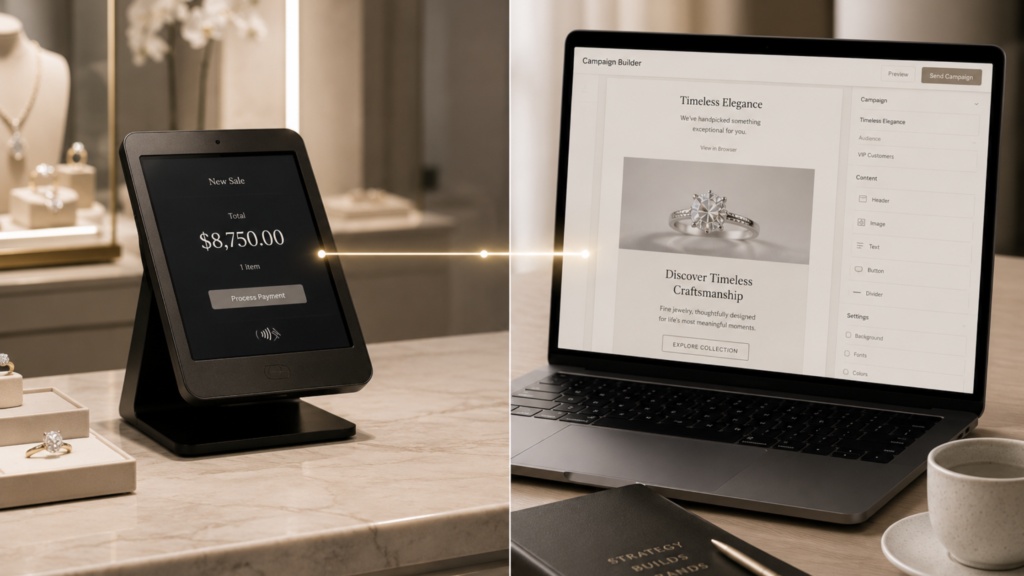
Third-party cookies have been unreliable for years, and platform reporting keeps getting less transparent. The response from serious brands has been to own their data outright.
A working first-party data strategy for a jewelry retailer includes:
- Email and SMS lists built from real purchase and inquiry activity
- POS data connected to marketing platforms so in-store revenue informs online targeting
- Preference capture at key moments, including ring size, metal preference, and important dates
- Server-side tracking to preserve measurement accuracy as browsers restrict more signals
Owned audiences also improve your retention economics, since email marketing built around repeat buyers consistently outperforms cold acquisition on cost. On the measurement side, attribution is moving toward blended models that weigh assisted conversions properly, and getting comfortable with measuring ROI across channels is now a leadership skill, not a reporting task.
Omnichannel Marketing: Connecting the Screen to the Showroom
Luxury jewelry is still largely bought in person, but it’s almost always researched online first. Omnichannel marketing exists to make that handoff invisible.
The pieces that matter most:
- Local inventory visibility so buyers know a piece is in stock before they drive over
- Appointment booking treated as a primary conversion, not a footer link
- Store associates briefed on which campaigns are running and what they promise
- Post-visit follow-up that references the actual conversation, not a generic template
This is where category experience separates a specialist from a generalist shop. Working with Rolex Official Jewelers and multi-location fine jewelry retailers has taught us that the online experience is ultimately measured by what happens at the counter, and our case studies show what that looks like in practice.
Traditional Agency Model vs. Modern Full-Service Approach
| Factor | Traditional Model | Modern Full-Service Approach |
| Structure | Separate vendors per channel | One integrated team across channels |
| Primary metric | Impressions, clicks, rankings | Revenue, qualified leads, retention |
| Data ownership | Held inside platform accounts | Consolidated in brand-owned systems |
| Creative process | Produced in isolation, then handed off | Informed by live performance data |
| Reporting cadence | Monthly channel summaries | Continuous dashboards with blended attribution |
| Attribution method | Last-click | Multi-touch and incrementality-based |
| Best suited for | Single-channel campaigns | Long consideration cycles and multi-location retail |
Neither model is wrong in every case. A brand running one campaign on one platform doesn’t need integration. A jeweler competing across search, social, and physical retail almost certainly does, which is exactly what our jewelry marketing services are structured to deliver.
Bringing It Together
The through line across every trend here is consolidation. Data, creative, media, and measurement are converging because buyers stopped experiencing them separately a long time ago. Brands that align their marketing to that reality compound gains while competitors optimize individual channels in isolation.
You don’t need to chase all of it at once. Start with the data you own, fix the measurement, then let those insights direct your media and creative decisions.
Let’s Look at Your Next Twelve Months
If your current setup feels like separate pieces pulling in different directions, that’s a solvable problem and usually a faster one than jewelers expect. Schedule a conversation with ARKTOP and we’ll map out where your channels are working against each other and what to fix first.
Frequently Asked Questions
What is the difference between an advertising agency and a digital marketing agency?
Advertising agencies traditionally focus on paid media placement and creative production, while digital marketing agencies cover a broader mix including SEO, email, web development, and analytics. That distinction has largely faded. Most full-service partners now handle both, because paid and organic performance depend on the same underlying data.
What are the biggest digital marketing trends for jewelers right now?
The most significant shifts are AI-influenced search results, short-form video as the primary discovery format, social commerce becoming a real revenue channel, and first-party data replacing third-party tracking. Omnichannel coordination between online marketing and in-store sales is close behind. Each one rewards brands that connect their channels rather than running them independently.
How much should a jewelry business spend on digital marketing?
Most established jewelry retailers allocate somewhere between 5% and 10% of revenue to marketing, with the split between brand building and performance shifting based on growth stage. Newer businesses typically weight toward acquisition. The more useful question is what your customer acquisition cost is relative to lifetime value, since that number tells you whether spending more is actually profitable.
Do jewelers still need SEO if AI is answering search queries?
Yes, and arguably more than before. AI systems build their answers from indexed web content, so the same signals that earn strong rankings also earn citations inside AI responses. What changes is the goal: you’re optimizing for qualified visits and brand mentions rather than pure traffic volume.
What should I look for when choosing a marketing agency for a luxury brand?
Look for category experience, since luxury buying behavior differs meaningfully from mass retail. Ask how they measure success beyond platform metrics, whether they can connect in-store revenue to online activity, and who is actually working on your account day to day. Request examples from brands with comparable price points and sales cycles.
How long does it take to see results from digital marketing?
Paid media can generate measurable results within the first month, though it usually takes two to three months of data to reach efficient performance. SEO and content programs typically show meaningful movement between months four and six, with compounding returns after that. Email and retention work often produces the fastest returns of all, since you’re marketing to people who already know your brand.