

You’ve put everything into your store. The inventory, the relationships, the reputation. But it only takes one incident to put all of it at risk. Jewelry retailers face some of the highest theft rates of any retail category, and the stakes are rarely just financial. A security breach can shake customer trust, disrupt operations, and leave your team feeling unsafe.
The good news is that modern jewelry store security has come a long way. Whether you’re running a single boutique or managing multiple locations, there are practical, scalable steps you can take to protect what you’ve built. This guide walks you through the systems, strategies, and habits that serious jewelers use to stay protected.
By the time you finish reading, you’ll have a clear picture of where your vulnerabilities might be and what to do about them.
Why Jewelry Store Security Is Essential
Jewelry stores carry more value per square foot than almost any other retail business. A single display case can hold inventory worth tens of thousands of dollars, and that reality doesn’t go unnoticed by thieves, fraudsters, and organized crime groups. The risks are real, and the consequences of being unprepared go far beyond the cost of what’s stolen.

Consider what a single security incident can trigger:
- Financial loss: Stolen inventory, damaged property, and increased insurance premiums can strain even a well-run business
- Reputation damage: Customers who feel unsafe in your store, or who learn their information was compromised, may never return
- Operational disruption: A break-in or robbery can force you to close temporarily, losing sales and momentum at a critical time
- Legal exposure: If customer data is compromised or an employee is harmed due to inadequate security measures, your business could face serious liability
Security isn’t a luxury for jewelers. It’s a core business function. The stores that take it seriously don’t just avoid losses. They build the kind of trust that keeps customers coming back for engagements, anniversaries, and every milestone in between.
Understanding the Real Risks Jewelry Stores Face
Theft in jewelry retail comes in many forms. Not all of them look like what you’d see in a movie. The most common threats include:
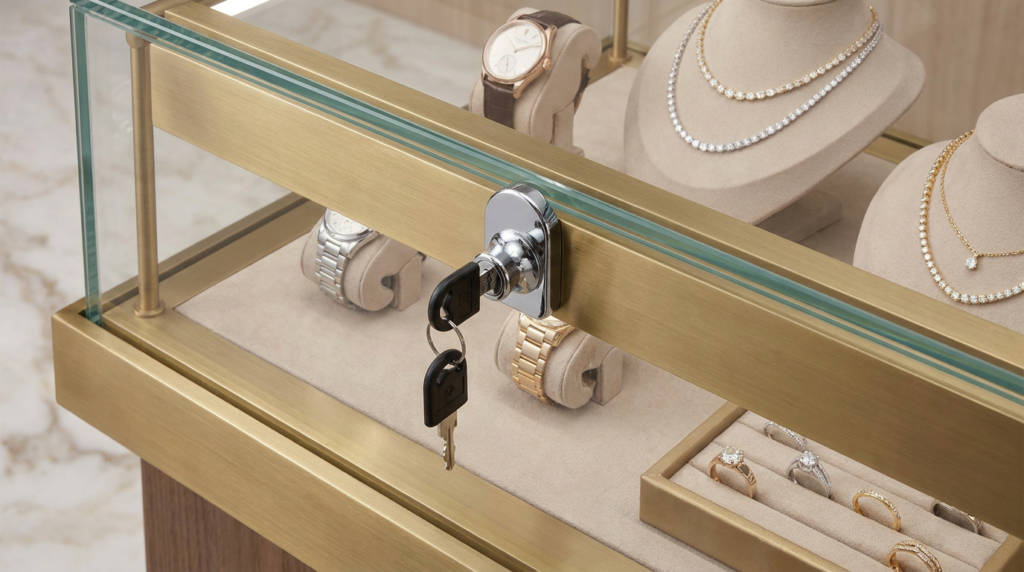
- Smash-and-grab incidents: Fast, high-impact attacks targeting visible, high-value display cases
- Distraction-based shoplifting: One person engages your staff while another pockets merchandise
- Employee theft: Often the most costly and least visible form of loss
- After-hours break-ins: Targeting stores with weak alarm systems or poor exterior lighting
- Organized retail crime: Coordinated groups that research your store before striking
Your store’s physical layout plays a significant role in how vulnerable you are. Open floor plans with limited sightlines, poorly lit corners, or display cases positioned near exits can all work against you. If you haven’t taken a close look at how your jewelry store layout affects your security posture, it’s worth doing before investing in new systems.
Building a Strong Jewelry Store Security Systems Foundation
The backbone of any solid security plan is the right combination of technology and physical controls. Jewelry store security systems today go far beyond a basic alarm. Here’s a breakdown of what a well-rounded setup includes and what each layer does for you:
| Security Layer | What It Does | Why It Matters |
| CCTV and Surveillance Cameras | Covers all entry points, the sales floor, back office, and vault | Deters theft and provides footage for investigations |
| Motion-Activated Lighting | Triggers inside and outside after hours | Improves camera quality and discourages intruders |
| Electronic Article Surveillance (EAS) | Tags on high-value pieces that trigger an alarm if removed | Slows grab-and-run attempts in real time |
| Access Control Systems | Keycard or biometric entry for restricted areas | Creates an audit trail of who accessed what and when |
| Monitored Alarm Systems | Professionally monitored with redundant communication paths | Ensures response even if a phone line is cut |
| Smash-and-Grab Resistant Cases | Laminated or tempered glass display cases | Buys time for cameras and responders during an attack |
No single layer is enough on its own. The strongest setups stack multiple systems so that if one fails, others compensate.
Training Your Team as Your First Line of Defense
Technology only works when the people using it know what to do. Your staff are your most immediate layer of security, and training them well is one of the highest-return investments you can make.
Start with situational awareness. Teach your team to greet every customer who enters, not just as a courtesy, but because acknowledged customers are far less likely to attempt theft. Train them to recognize common warning signs:
- One person engaging a staff member while another moves toward a display
- Requests to see multiple high-value items at once with no clear intent to purchase
- Customers who linger near exits or keep their hands below display case level
- Repeat visitors who browse without buying and seem to be studying your staff’s routines

Beyond awareness, your team needs clear protocols for high-risk moments. Consider establishing written answers to these questions and practicing them regularly:
- When does a staff member call for backup during a suspicious interaction?
- How do you handle a situation where someone appears to be casing the store?
- What is the step-by-step procedure if an alarm goes off during business hours?
- Who is the designated point of contact in the event of an emergency?
Having these answers documented and rehearsed is what separates a prepared team from one that freezes under pressure.
Managing Inventory as a Security Strategy
You can’t protect what you can’t account for. Tight inventory management is a core part of effective jewelry store security, and it serves double duty: it helps you catch discrepancies early and gives you a defensible record if a claim or investigation ever arises.
Here’s a simple framework for keeping your inventory tight:
- Daily counts: High-value pieces should be counted every morning when cases are opened and every evening when they are locked
- End-of-day reconciliation: Compare the day’s sales and returns against your starting count before anyone leaves
- Regular full audits: A complete inventory audit should happen at least monthly, with spot checks on rotating categories in between
- Staged display rotation: Only put a selection of your inventory on the floor at any given time to limit exposure without limiting the customer experience
- Thorough documentation: Photograph every piece, record serial numbers, and keep current appraisals on file. In the event of a loss, this documentation is what makes the difference between a smooth insurance claim and a prolonged dispute
Conclusion
Jewelry store security isn’t a one-time purchase. It’s an ongoing commitment to the systems, habits, and people that protect everything you’ve worked to build. The stores that handle security well don’t just react to incidents. They make it difficult for incidents to happen in the first place like Rolex and Hamra Jewelers.
If you’re ready to think about your business more strategically, our team at ARKTOP works with jewelers every day to build the kind of presence that attracts the right customers and keeps them coming back. Reach out to us and let’s talk about what your business needs next.
Frequently Asked Questions
What are the most important security systems for a jewelry store?
The most critical systems include high-definition surveillance cameras, a professionally monitored alarm, access control for restricted areas, and smash-and-grab resistant display cases. Layering these systems together gives you overlapping protection so that no single failure creates a total vulnerability.
How can I prevent employee theft in my jewelry store?
Start with thorough background checks during hiring. Implement daily inventory counts, limit access to the vault and back office to necessary personnel only, and use access control systems that create an audit trail. A culture of accountability, combined with clear policies and consistent enforcement, is your strongest long-term protection.
How often should I audit my jewelry inventory?
High-value pieces should be counted daily, and a full reconciliation of your entire inventory should happen at least monthly. Many jewelers also conduct spot audits on specific categories or cases on a rotating basis. The more frequent your counts, the faster you’ll catch any discrepancy.
What should I do if my jewelry store is robbed?
Prioritize the safety of your staff and customers above all else. Do not attempt to intervene physically. Call 911 immediately, secure the area, and avoid touching anything that could be evidence. Contact your insurance provider as soon as possible and provide them with your inventory documentation. Your surveillance footage will be critical for the investigation.
Does my store layout affect security?
Absolutely. A layout with clear sightlines, well-lit display areas, and cases positioned away from exits makes your store significantly harder to steal from. Your layout should also allow staff to maintain visual contact with customers throughout the floor without creating blind spots.
What type of insurance do jewelry stores need?
Jewelry stores typically need a specialized commercial policy that covers the unique risks of high-value inventory, including coverage for theft, mysterious disappearance, and transit. Work with an insurer that has experience in the jewelry industry, and make sure your coverage limits are updated regularly as your inventory value changes.
More from the blog
Your brand deserves a partner fluent in luxury.
A 30 minute strategy call. We come with a first read of your site, search, and ads.