
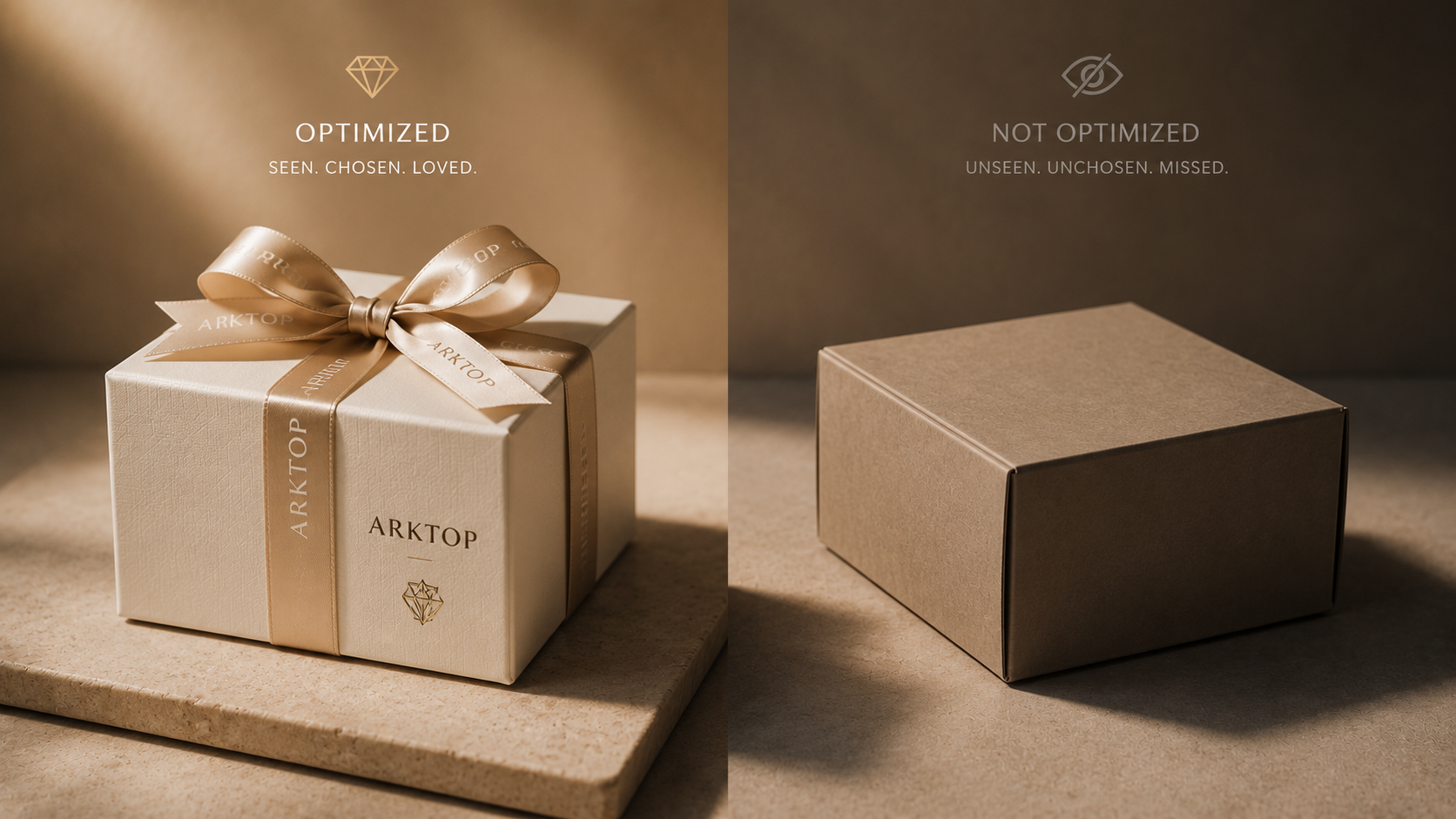
Picture two jewelers selling the same diamond tennis bracelet. One shows up the moment a buyer searches with their credit card practically in hand. The other gets buried under a thousand listings nobody scrolls to. Same product, same price, wildly different results. The difference usually comes down to one thing: the words they chose to target.
If you sell jewelry online, the keywords for selling jewelry that you build your store around will quietly decide who finds you and who never does. Most jewelers stuff their pages with broad terms like “diamond ring” and wonder why traffic does not turn into sales. The truth is that the highest-converting keywords are rarely the most obvious ones.
In this guide, you’ll learn which keyword types actually move product in 2026, how to find them for your own store, and where to place them so they pull in buyers who are ready to spend. By the end, you’ll be able to look at any product page and know exactly what it should be ranking for.
Why the Right Keywords for Selling Jewelry Matter More Than Ever
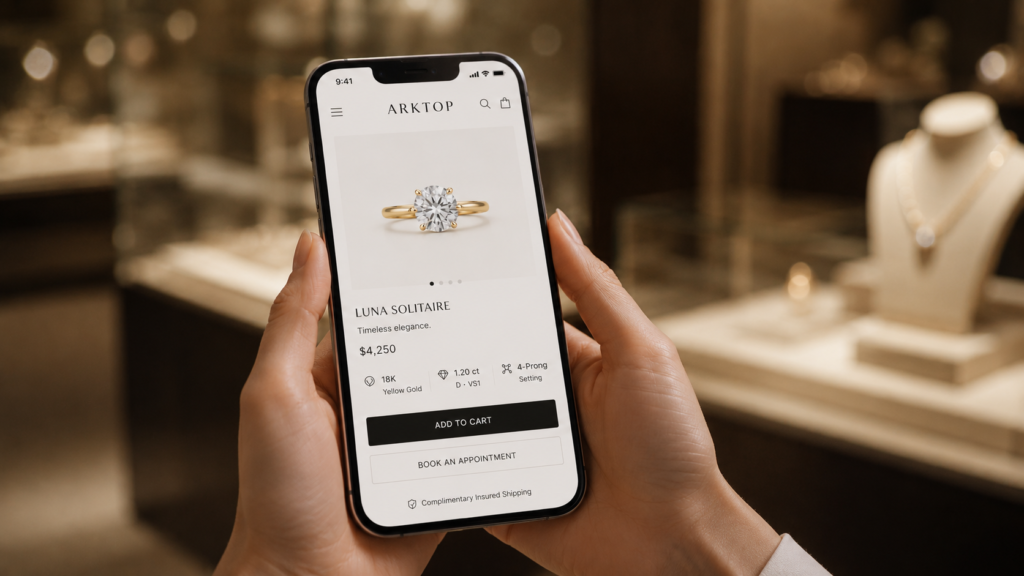
Search behavior has changed. Buyers no longer type one or two words and browse for an hour. They type exactly what they want, and they expect the right result instantly. That shift rewards jewelers who understand intent and punishes those who chase volume alone.
Here’s why your keyword choices carry so much weight today:
- Competition is brutal on broad terms. Ranking for “gold necklace” means fighting national chains with massive budgets. You’ll rarely win that fight.
- Buyer intent lives in specific phrases. Someone searching “14k gold cuban link chain 18 inch” knows exactly what they want. That’s a buyer, not a browser.
- AI-driven search favors clarity. Search engines and AI assistants now pull precise answers, so pages built around clear, specific terms get surfaced more often.
- Wasted traffic costs you money. Traffic that never converts still eats your time and ad spend. The right keywords filter for people likely to buy.
When you understand the way buyers move from curiosity to checkout, you can map keywords to each stage. If you want a deeper look at that path, our breakdown of the buyer’s journey shows how search intent evolves as someone gets closer to a purchase.
High-Intent Jewelry Keywords That Signal a Ready Buyer
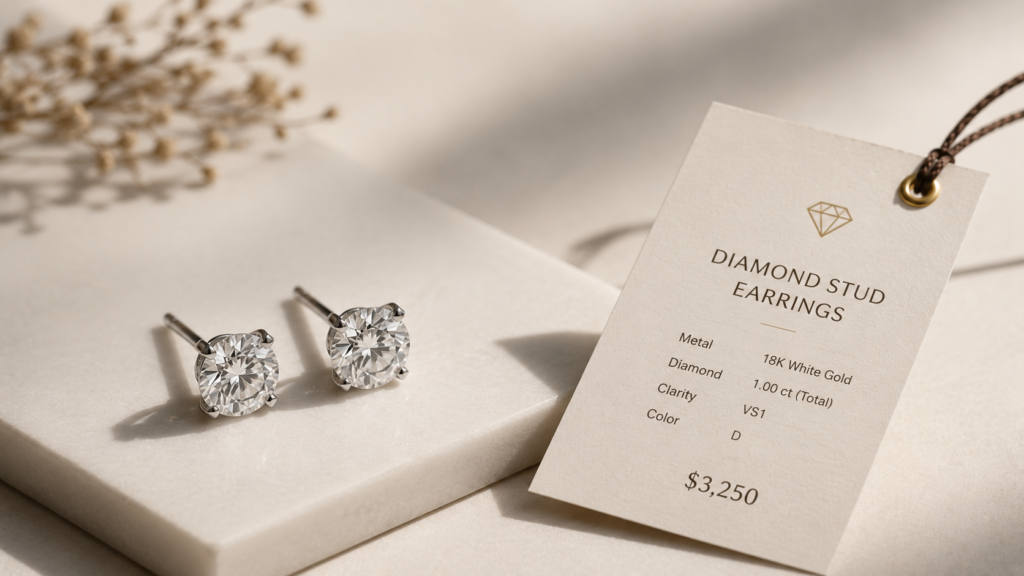
Not all searches are created equal. Some signal idle curiosity, and others practically wave a flag that says “I’m ready to buy.” Your job is to learn the difference and prioritize the second group.
High-intent jewelry keywords usually include one or more buying signals:
- A specific product type: “rose gold engagement ring,” not just “ring”
- A material or spec: “platinum,” “1 carat,” “lab grown”
- A purchase verb: “buy,” “shop,” “order”
- A modifier that implies decision-making: “best,” “custom,” “near me”
Compare these two searches:
- “diamond earrings” (broad, mostly browsers, huge competition)
- “1 carat lab grown diamond stud earrings” (specific, high intent, ready to convert)
The second phrase brings less traffic, but a far higher share of that traffic turns into sales. That’s the key. You want fewer visitors who are more likely to buy. When you’re choosing what to target across your store, lean toward the phrases that carry these signals. They cost less to compete for and bring in buyers with strong purchase intent.
Long-Tail Keywords for Jewelry: Smaller Searches, Bigger Returns
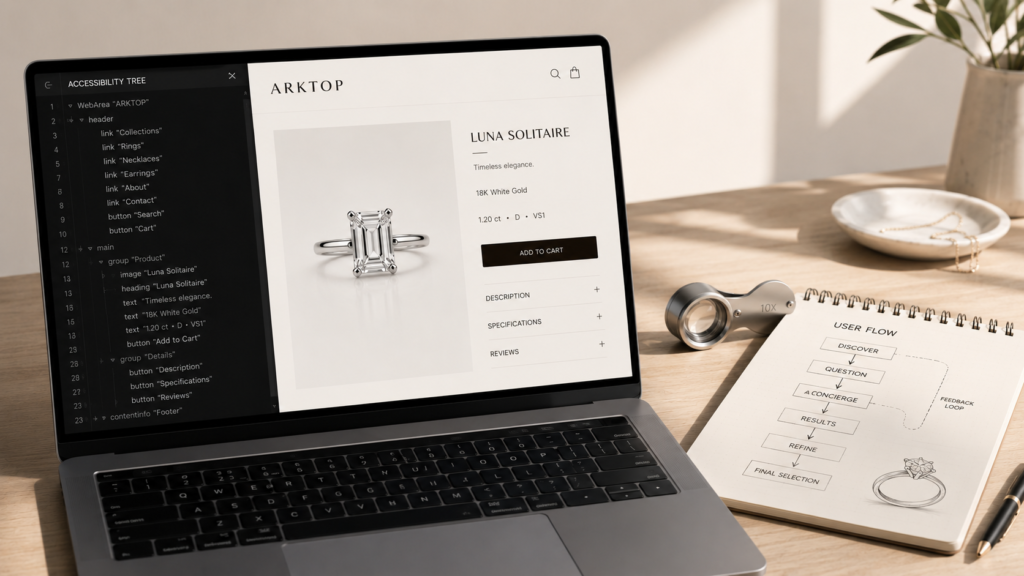
If high-intent terms are the strategy, long-tail keywords are the engine that drives it. A long-tail keyword is a longer, more specific phrase, usually three or more words, that targets a narrow slice of search traffic.
They feel small because each one gets fewer searches. But they add up fast, and they convert at a much higher rate. Here’s why long-tail keywords for jewelry deserve a central spot in your strategy:
- Lower competition. Fewer stores target them, so you rank faster.
- Higher conversion. The specificity matches a buyer who knows what they want.
- Cheaper paid clicks. If you run ads, long-tail terms usually cost less per click.
- Better content fit. They map naturally to individual product pages and collections.
Think about how a real customer searches:
- Broad: “wedding band”
- Long-tail: “men’s brushed titanium wedding band 6mm”
- Long-tail: “vintage style rose gold wedding band with milgrain”
Each long-tail phrase describes a real product you might carry. That makes them perfect anchors for your product and collection pages. The trick is volume: you don’t target three long-tail keywords, you target hundreds across your whole catalog. For a fuller picture of building a store around these terms, our guide on how to sell jewelry online walks through the foundation.
Product Page Keywords for Jewelry: Where Placement Wins or Loses
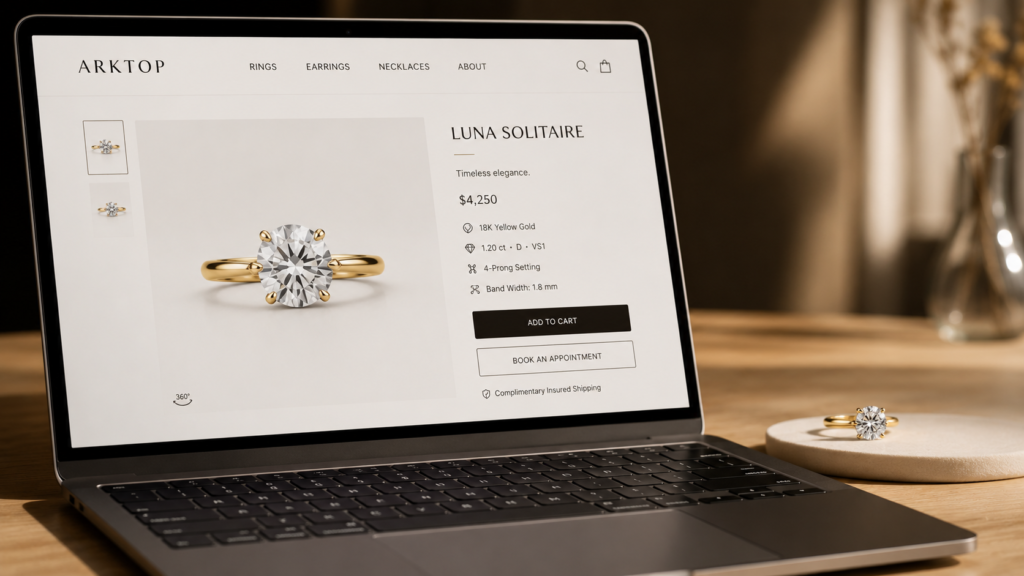
Finding the right keywords is half the work. The other half is placing them where search engines and buyers actually look. Even the best keyword does nothing buried in the wrong spot.
For strong product page keywords for jewelry, focus on these placements:
- Page title and meta description. Your primary keyword belongs here, written naturally.
- Product name and H1. Lead with the specific term a buyer would type.
- The first 100 words of the description. Get your keyword in early, then write for humans.
- Image alt text. Describe the piece using the keyword so it surfaces in image search.
- URL slug. A clean, keyword-rich URL beats a string of random numbers.
A word of caution: never stuff. Cramming the same phrase ten times reads as spam to both buyers and search engines, and it can sink your rankings. Write descriptions that sound like a knowledgeable salesperson talking to a customer, then make sure the keyword fits in naturally.
If product descriptions are where you tend to struggle, you’re not alone. Most jewelers do. Our guide on writing SEO descriptions covers how to make each one work double duty: ranking well and driving conversions.
Jewelry Ecommerce Keywords for Paid and Organic Channels
Your keyword strategy shouldn’t live in one channel. The strongest jewelry ecommerce keywords pull weight across organic search and paid campaigns at the same time, and the two reinforce each other.
Here’s how the same keyword research serves both sides:
- Organic search: Build product pages, collections, and blog content around your targeted terms to earn rankings over time.
- Paid search: Bid on high-intent terms to capture buyers immediately while your organic rankings grow.
- Shared insight: The keywords that convert in ads tell you exactly what to optimize organically, and the reverse holds true too.
Paid search is especially powerful for the high-intent terms we covered earlier. When someone searches “buy custom engagement ring,” appearing at the top of the page at that exact moment is worth real money. If you want to see how this plays out in practice, our Google Ads for jewelry guide breaks down how to structure campaigns around high-intent keywords
The jewelers who win treat organic and paid as one connected system rather than two separate budgets.
How to Do Keyword Research for Jewelry Stores
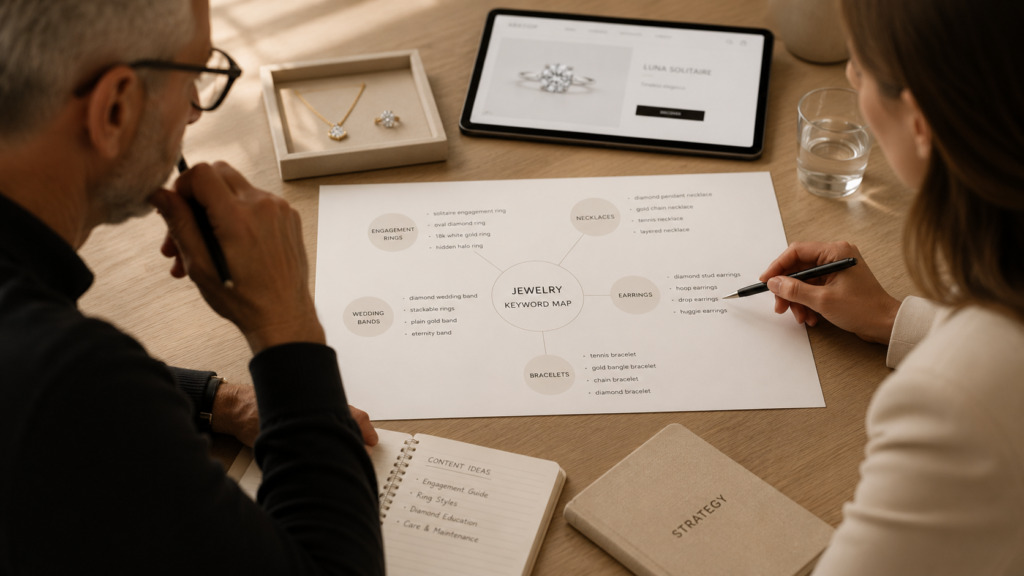
You don’t need an enterprise budget to find the right terms. Effective keyword research for jewelry stores comes down to a repeatable process you can run yourself.
Follow these steps:
- List your products plainly. Write down what you sell in the words a customer would use, not industry jargon.
- Add specifics. Layer in materials, sizes, styles, and occasions. This is where long-tail terms appear.
- Check what buyers actually search. Use a keyword tool, your own site search data, and the “people also ask” boxes on Google.
- Study the competition. Look at which terms similar stores rank for, then find the gaps they’ve missed.
- Sort by intent. Separate the browsers from the buyers, and prioritize the buyer terms first.
- Map keywords to pages. Assign each keyword a home so nothing competes against itself.
This isn’t a one-time task. Buyer language shifts with trends, seasons, and new collections, so revisit your research regularly. Understanding the full process of selling jewelry online helps you connect keyword research to every other part of your store, from product photos to checkout.
If running this process in-house feels like more than your team can take on, that’s exactly the kind of work our jewelry marketing team specializes in.
Turning Keywords Into Consistent Sales
The right keywords are the quiet engine behind every jewelry store that sells well online. They decide who finds you, how ready those people are to buy, and how much you spend to reach them. When you shift away from broad, crowded terms and toward specific, high-intent phrases, you stop competing for attention and start capturing buyers.
Start with one collection. Map it to long-tail, buyer-ready keywords, place them where they count, and watch how the quality of your traffic changes. Then do it again with the next collection.
Ready to build a keyword strategy that actually drives sales for your store? Reach out to the team at ARKTOP and let’s map it out together.
Frequently Asked Questions
What are the best keywords for selling jewelry online?
The best keywords are specific, high-intent phrases that match how real buyers search, such as “14k gold solitaire engagement ring” rather than broad terms like “ring.” These long-tail keywords face less competition and attract people who are closer to making a purchase, which means a higher conversion rate for your store.
How many keywords should each jewelry product page target?
Each product page should focus on one primary keyword and a small handful of closely related variations, usually two to four. Trying to rank a single page for too many unrelated terms dilutes its strength and confuses search engines about what the page is actually about.
What is the difference between high-intent and high-volume jewelry keywords?
High-volume keywords get a lot of searches but often come from browsers who aren’t ready to buy, and they’re extremely competitive. High-intent keywords get fewer searches but come from buyers who know what they want, so they convert at a much higher rate and usually cost less to compete for.
How often should jewelry stores update their keyword research?
Plan to revisit your keyword research at least quarterly, and more often around major buying seasons like the holidays and bridal season. Buyer language shifts with trends and new collections, so keeping your research current ensures your pages stay aligned with what people are actually searching for.
Do long-tail keywords really work for small jewelry businesses?
Yes, and they often work better for smaller stores than broad terms do. Long-tail keywords let you compete against larger retailers by targeting specific niches they overlook, and because they signal clear buyer intent, the traffic they bring is far more likely to convert into actual sales.
More from the blog
Your brand deserves a partner fluent in luxury.
A 30 minute strategy call. We come with a first read of your site, search, and ads.