
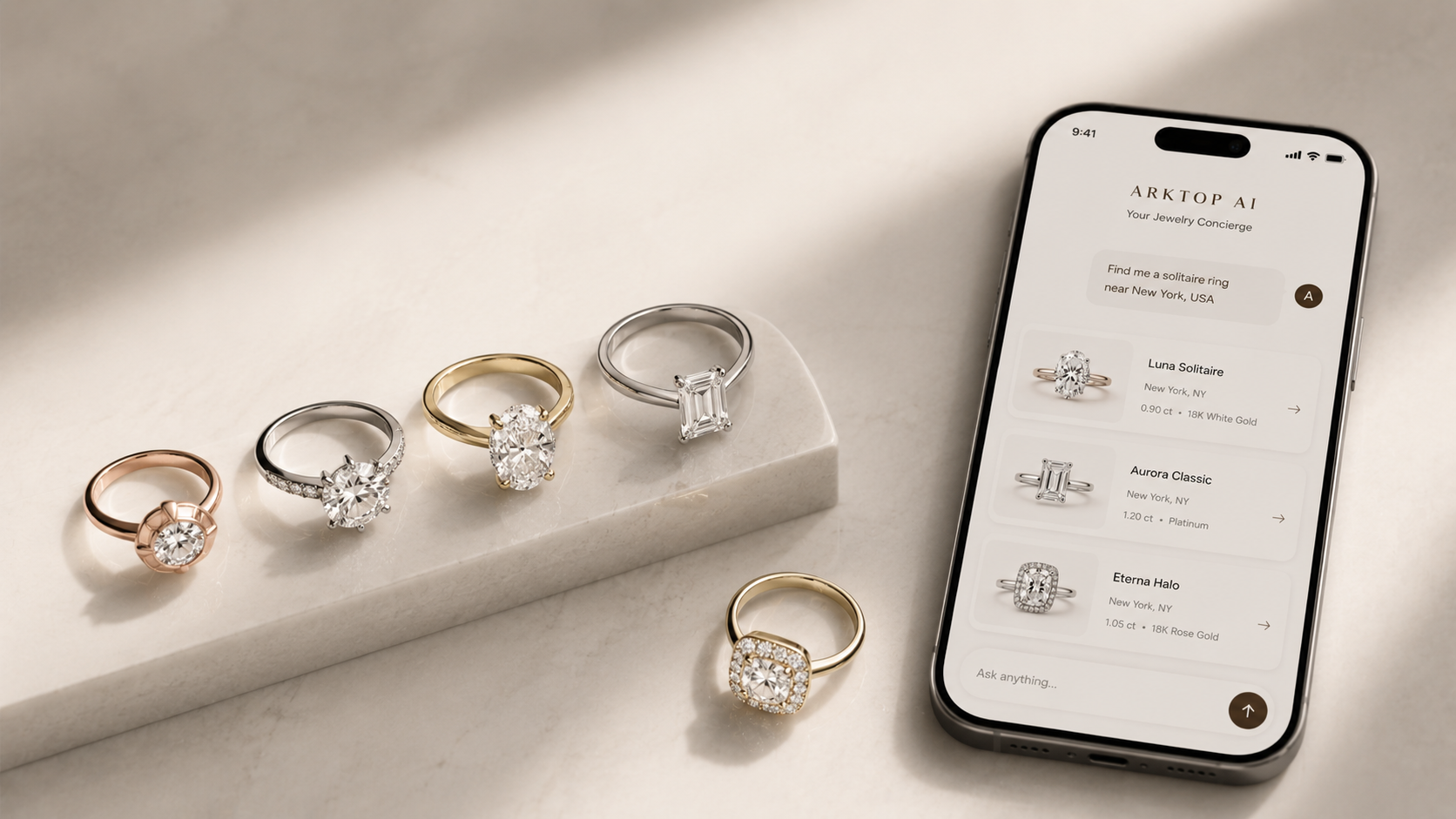
Picture a customer who never visits your website. Instead, they tell an AI assistant, “Find me a platinum solitaire engagement ring under five thousand dollars from a trusted local jeweler.” The assistant goes to work, opening tabs, reading pages, comparing options, and reporting back. Your store may have the perfect ring. But if the assistant cannot read your site cleanly, you were never in the running.
This is the shift toward agentic browsing, and it is moving faster than most jewelers realize. Google has already added a way to measure how ready your website is for this new kind of visitor, and it lives inside a tool many web developers already use every day: Lighthouse.
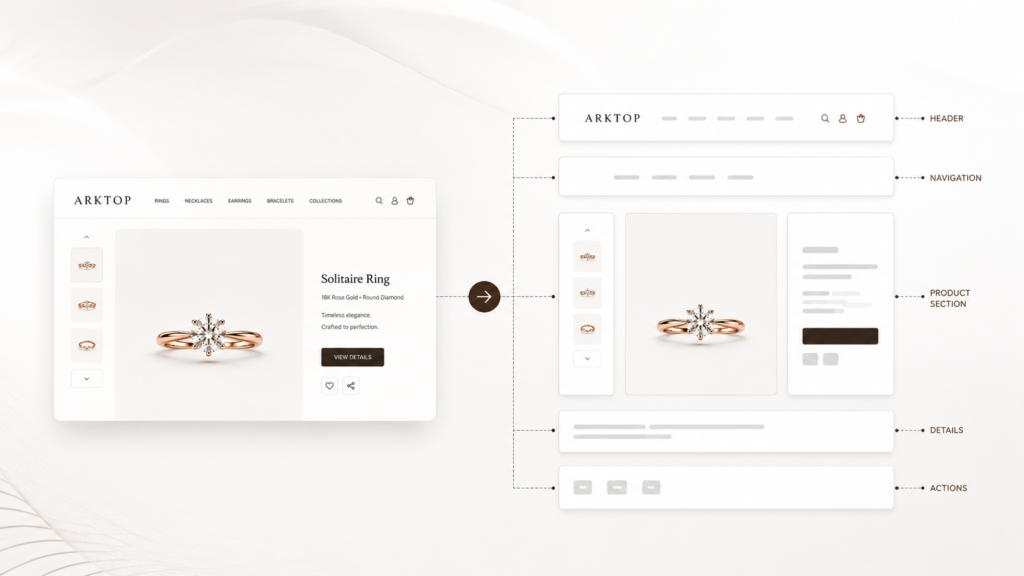
In this guide, you will learn what agentic browsing actually means, why Google built an audit for it, and what the results say about your jewelry website. More importantly, you will walk away knowing the practical steps that help your brand stay visible as AI agents become the ones doing the shopping.
What Agentic Browsing Means for Your Jewelry Brand
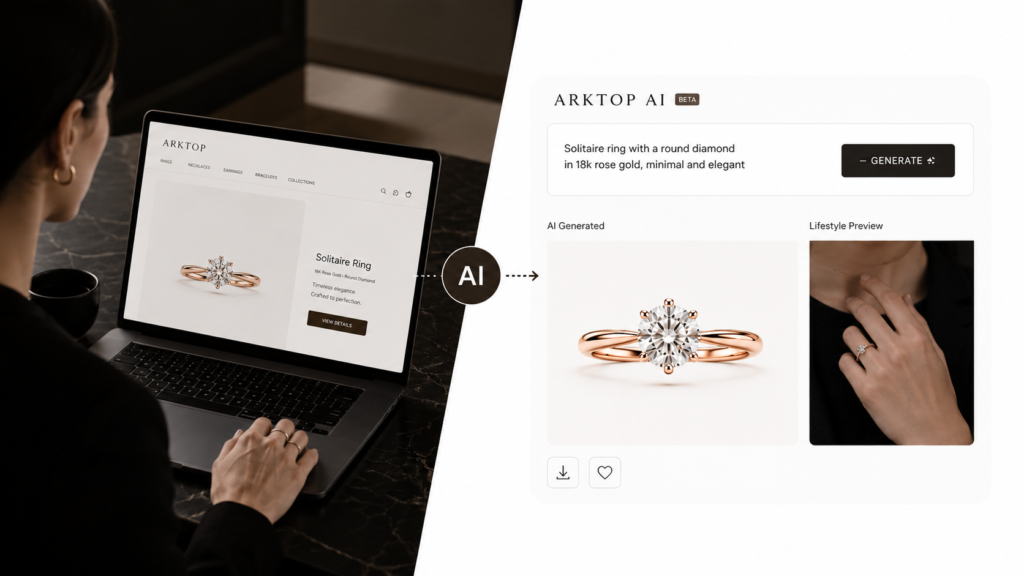
Agentic browsing is a new way of using the web where AI agents handle tasks on your behalf instead of you clicking through pages yourself. Rather than searching, scanning results, and navigating site by site, you give the agent a goal and it carries the whole thing through to completion.
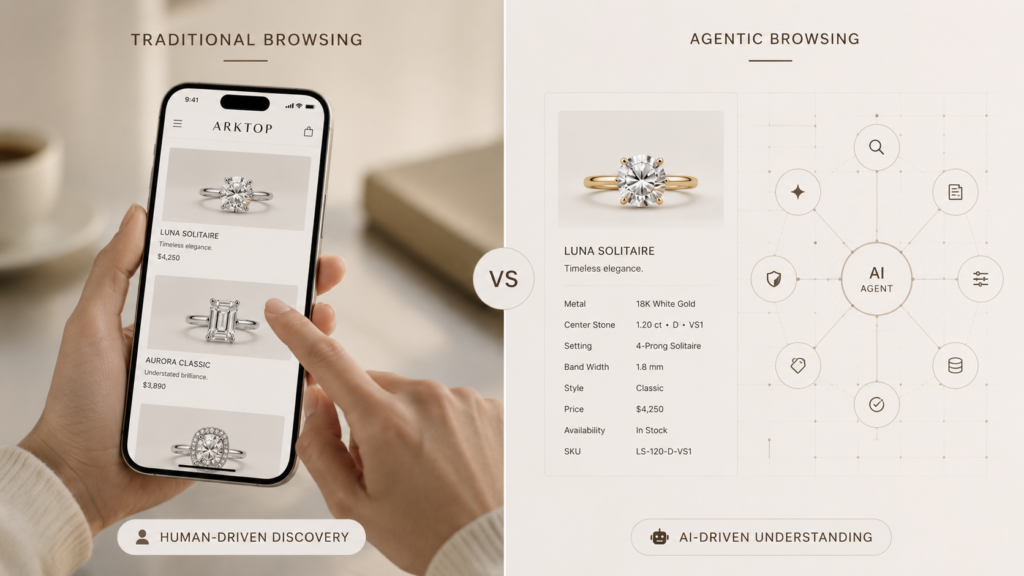
Think of the difference this way:
- Traditional browsing: A person searches, evaluates results, clicks a link, reads the page, and completes the purchase themselves.
- Agentic browsing: A person gives one instruction, and an AI agent researches, navigates, fills in details, and even completes the transaction.
These agents live inside a new wave of AI-first browsers and assistants. Perplexity’s Comet and OpenAI’s ChatGPT Atlas are two early examples, and more arrive each quarter. The agents simulate human behavior. They click, scroll, type, read forms, and move across multiple sites without a person guiding each step.
For a jeweler, this matters because the agent becomes the middle layer between your brand and the buyer. If your website is easy for an agent to understand and act on, your pieces get surfaced, compared, and recommended. If it is not, the agent quietly moves on to a competitor whose site it can read. We covered the foundation of this idea in our guide on whether your site is readable by AI, and agentic browsing raises the stakes even higher.
Why Google Built the Lighthouse Agentic Browsing Category
Lighthouse is Google’s open-source tool for auditing web pages. If you have ever run a PageSpeed Insights report, you have already used Lighthouse, because it powers that tool behind the scenes. For years it scored sites on performance, accessibility, best practices, and SEO.
Now Google has added something new: the Lighthouse agentic browsing category. It exists because the way people reach websites is changing, and Google wants site owners to have a way to measure how prepared they are.
Here is what makes this audit different:
- It evaluates how well your site is built for machine interaction, not just human eyes.
- It does not produce a single weighted score from 0 to 100 like other Lighthouse categories.
- It focuses on gathering data and giving you actionable signals, because the standards for the agentic web are still taking shape.
The reason Google avoided a single tidy score is honest and worth understanding. The rules for the agentic web are still emerging, so instead of pretending there is one perfect number, the audit highlights specific issues you can fix. For a luxury jeweler, that is actually useful. You get a checklist of real problems rather than a vanity metric.
This connects to a bigger pattern in how Google is reshaping its tools around AI. We explored a related shift in our guide to Google’s AI Max upgrade, and the Lighthouse agentic browsing category is part of that same direction of travel.
How the Lighthouse Agentic Browsing Audit Actually Works
To understand what the audit checks, you need to know one key concept: the website accessibility tree. This is the structured map of your page that assistive technology, like screen readers, has always relied on. It strips away the visual design and describes what each element actually is: a button, a heading, a link, a form field.
Agents rely on this same accessibility tree as their primary data model. They do not see your beautiful product photography the way a person does. They read the underlying structure. So a site that is well-built for accessibility tends to be well-built for agents too.
The audit looks at deterministic, repeatable signals rather than guesses. Some of the things it checks include:
- Names and labels: Every interactive element, like a button or a link, needs a clear programmatic name so an agent knows what it does.
- Accessibility tree quality: A clean, well-structured tree helps an agent navigate your pages without getting lost.
- Layout stability: Elements that shift around while a page loads can cause an agent to click the wrong thing. This is the same layout shift problem that hurts human experience too.
A few practical culprits tend to cause trouble. Content that loads or registers late through JavaScript can be missed during the audit snapshot. Large or overly complex page structures can muddy the accessibility tree. And layout shifts caused by ads, images without set dimensions, or injected content can move elements right as an agent reaches for them.
If any of that sounds familiar, it should. Many of these issues overlap with classic site quality problems. The good habits that make a site fast and usable for people, the kind we cover in our piece on why website speed optimization is important, are largely the same habits that make a site readable to agents.
What This Means for Luxury Jewelers Specifically
Luxury jewelry sites face a particular tension. They are designed to feel immersive, visual, and emotional. Heavy imagery, custom animations, video backgrounds, and interactive galleries all create the sense of craftsmanship that justifies a premium price. The problem is that those same elements can be exactly what trips up an agent.
Here is why jewelers should pay closer attention than most:
- High-value, considered purchases: Engagement rings, fine watches, and heirloom pieces involve research. Buyers increasingly let agents do that research, so being agent-readable directly affects whether you make the shortlist.
- Visual-first design: The luxury aesthetic leans on imagery and motion, which can leave the underlying structure thin if it is not built thoughtfully.
- Trust signals matter: Certifications, return policies, and authenticity details need to be readable as structured information, not buried inside a graphic an agent cannot parse.
None of this means stripping away the beauty of your site. It means making sure the structure beneath the beauty is solid. A piece can have a stunning hero video and still carry clean, well-labeled, machine-readable content underneath. Strong UX design is the bridge that lets a site stay gorgeous for people while staying legible to agents.
This is also closely tied to the broader rise of AI-driven commerce. Platforms are racing to build agent-friendly storefronts, a topic we unpack in our guide to Shopify’s agentic storefronts for luxury brands. The direction is clear. The brands that prepare now will hold an advantage as adoption grows.
How to Prepare Your Site for an AI-Ready Future
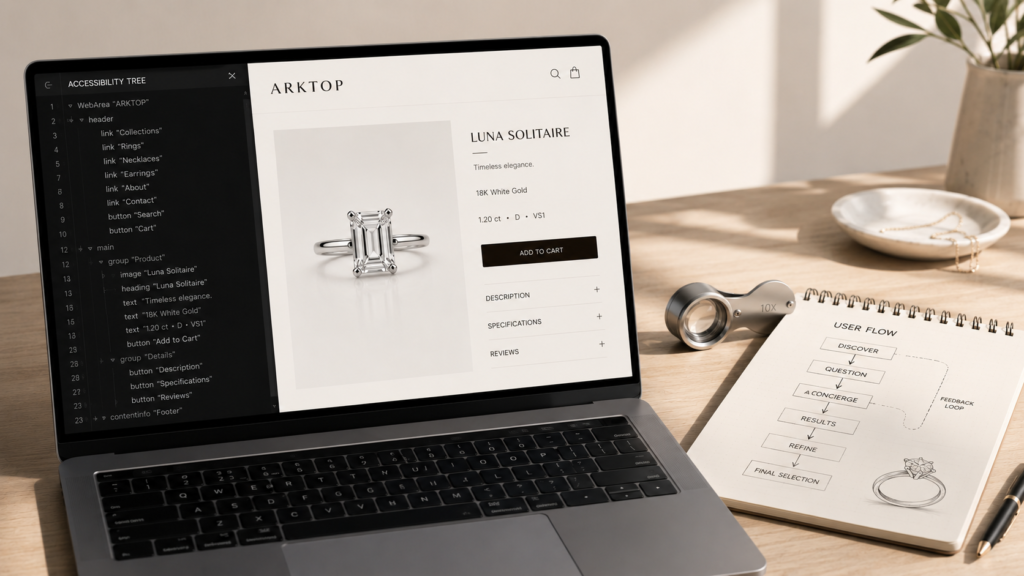
The good news is that becoming an AI-ready website does not require tearing everything down. It rewards the same disciplined web practices that already serve your customers well. Here is where to focus.
Start with structure and labels. Make sure every button, link, and form field has a clear, descriptive name in the code, not just a pretty icon. An agent should be able to tell a “Book a consultation” button from an “Add to cart” button without guessing.
Stabilize your layouts. Set dimensions on images, control how ads or pop-ups load, and reduce content that jumps around as the page renders. This helps agents and humans alike interact with confidence.
Keep critical content readable. Pricing, availability, materials, certifications, and policies should live in clean, structured text wherever possible, not locked inside images or loaded so late that an agent misses them.
Test regularly. Run your pages through Lighthouse and review the agentic browsing signals alongside your usual performance and accessibility checks. Treat the findings as a to-do list, not a grade.
Build on a strong foundation. Much of this comes down to how your site is built in the first place. A well-engineered platform makes agent-readiness far easier to achieve and maintain, which is exactly why thoughtful luxury WordPress web development pays off as these standards mature.
The brands that treat agent-readiness as part of normal site quality, rather than a separate scramble later, will protect their AI search visibility as more buyers hand their browsing over to assistants.
ARKTOP’s Role in Getting Your Site Agent-Ready
This is where having the right partner makes the difference. At ARKTOP, we build and optimize luxury jewelry websites that look extraordinary and perform under the hood, which is exactly the combination agentic browsing rewards. We pair the immersive, premium experience your customers expect with the clean structure, fast performance, and machine-readable content that agents need to find and recommend your pieces.
We stay close to changes like the Lighthouse agentic browsing category so you do not have to track every emerging standard yourself. Our job is to keep your brand visible as the web evolves, whether a customer is browsing in person, on their phone, or through an AI agent acting on their behalf.
The shift toward agent-ready websites is still early, which means there is real advantage in moving before your competitors do. The jewelers who prepare now will be the ones AI agents surface first when buyers ask for the perfect piece.
Want to make sure your jewelry website is ready for the next era of browsing? Schedule a consultation with ARKTOP and let’s build something that wins with people and AI alike.
Frequently Asked Questions
What is agentic browsing in simple terms?
Agentic browsing is when an AI agent completes web tasks for you instead of you clicking through pages yourself. You give it a goal, like finding and comparing engagement rings, and it navigates websites, reads content, and reports back or completes the task. It turns a multi-step process into a single instruction.
What is the Lighthouse agentic browsing category?
It is a new audit category in Google’s Lighthouse tool that measures how well your website is built for AI agents to interact with. Unlike other Lighthouse categories, it does not give a single 0 to 100 score, because the standards are still emerging. Instead, it provides specific, actionable signals about what to improve.
How is agentic browsing different from regular SEO?
Traditional SEO focuses on helping human searchers find and choose your site in search results. Agentic readiness focuses on whether an AI agent can actually read, navigate, and act on your pages once it gets there. The two overlap, because clean structure helps both, but agent-readiness adds a new layer beyond ranking.
Do I need to redesign my whole jewelry website to be AI-ready?
In most cases, no. Becoming an AI-ready website usually means improving structure, labeling, layout stability, and how critical content loads, rather than rebuilding from scratch. A site can keep its luxury look and feel while becoming far more readable to agents underneath.
Why does the website accessibility tree matter for AI agents?
The accessibility tree is the structured map of your page that describes what each element actually is, such as a button or a heading. Agents rely on this tree as their main way of understanding a page, since they do not view your design the way a person does. A clean accessibility tree makes your site easier for agents to navigate.
How can I tell if my jewelry site is ready for AI agents?
Start by running your pages through Lighthouse and reviewing the agentic browsing signals alongside your usual performance and accessibility results. Look for issues like unlabeled buttons, layout shifts, and content that loads late. For a thorough review tailored to luxury sites, a specialist partner can audit your site and map out the fixes.
More from the blog
Your brand deserves a partner fluent in luxury.
A 30 minute strategy call. We come with a first read of your site, search, and ads.