Closing a high-ticket sale in 2026 demands a departure from the static websites of the past in favor of interactive, immersive brand experiences. For brands specializing in custom jewelry pieces, the digital experience must serve as a bridge between a customer’s vision and an artisan’s reality. Success today requires a shift from simply displaying inventory to facilitating an immersive, collaborative journey that justifies premium pricing and builds deep emotional resonance.
What Are the Best Practices for Displaying Custom Jewelry Pieces to Maximize High-Ticket Conversions?
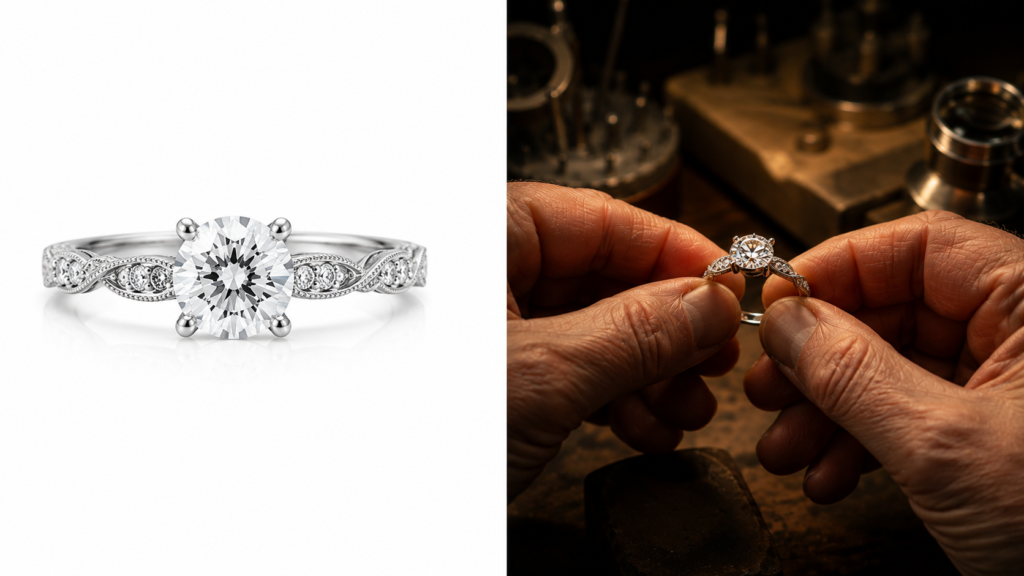
In the 2026 luxury landscape, your website is no longer just a “gallery” it is a high-fidelity digital concierge. For brands specializing in custom jewelry pieces, the challenge isn’t just showing the product; it’s conveying the invisible value of the craftsmanship, the emotion of the design, and the technical precision of the build.
To win in a market driven by AI-search and hyper-informed consumers, your digital storefront must do the heavy lifting of building trust before a client ever steps into your showroom. This guide outlines the strategic framework for presenting custom work in a way that converts “browsers” into “collectors.”
1. Beyond the Still Image: Sensory Visual Discovery
Static photos are the “entry fee,” but they aren’t the closing argument. To truly showcase the brilliance of your work, you must lean into motion and depth.
- Macro-Cinematography: Use short-form, high-definition video loops (6-10 seconds) that show the light hitting the facets of the stones as the piece moves.
- 360-Degree “Exploded” Views: Allow users to see the “under-gallery” and the technical structure of the setting. This proves the quality of the “hidden” parts of the piece.
- Augmented Reality (AR) Integration: Letting a client “wear” a custom-designed ring via their smartphone camera reduces the psychological barrier to purchase.
2. Anatomy of a High-Converting Custom Product Page
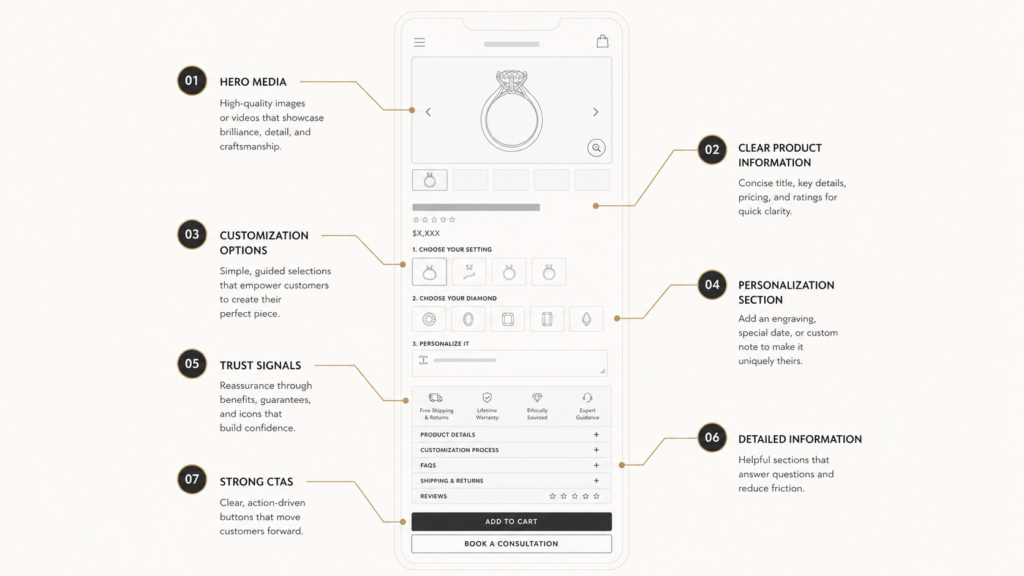
A standard product description won’t cut it for a unique commission. Every one of your custom jewelry pieces needs a dedicated page that functions as a technical and emotional dossier.
- Detailed Material Specifications: Don’t just list “Gold.” Specify “Recycled 18k Fairmined Gold” or “Platinum 950.”
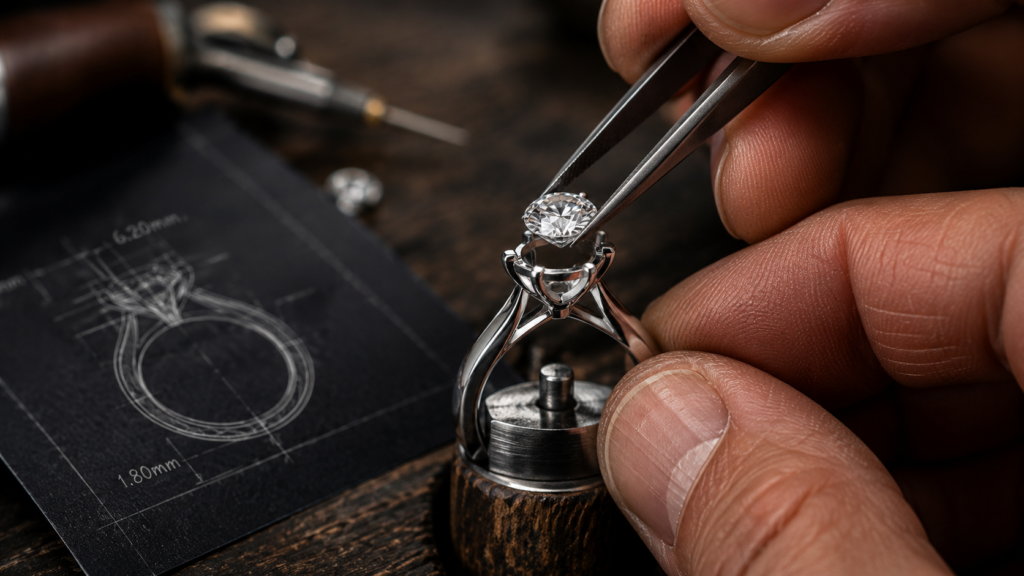
- The “Build” Journey: Include a “Timeline” section that explains the CAD design, the casting, and the hand-finishing stages. This justifies the premium price point and the lead time.
- Interactive Calls-to-Action: Instead of “Buy Now,” use “Start Your Custom Journey” or “Request a Design Consultation.” This is a critical driver for Website Lead Generation.
3. The Power of Personalized Storytelling
In the luxury sector, the “Why” is just as important as the “What.” Every piece of custom jewelry has a heartbeat as a reason it was created.
Using Jewelry Storytelling allows you to bridge the gap between a cold screen and a warm emotional connection. Share the “Inspiration Board” behind the piece or the client’s specific request (e.g., “Resetting a grandmother’s heirloom diamond into a modern architectural setting”). When other potential clients read these stories, they see themselves in the process.
Pro Tip: Humanize the artisan. Show the hands that set the stones. In 2026, the “Human Touch” is the ultimate luxury differentiator in an AI-saturated world.
4. Frictionless UX and Search Intent
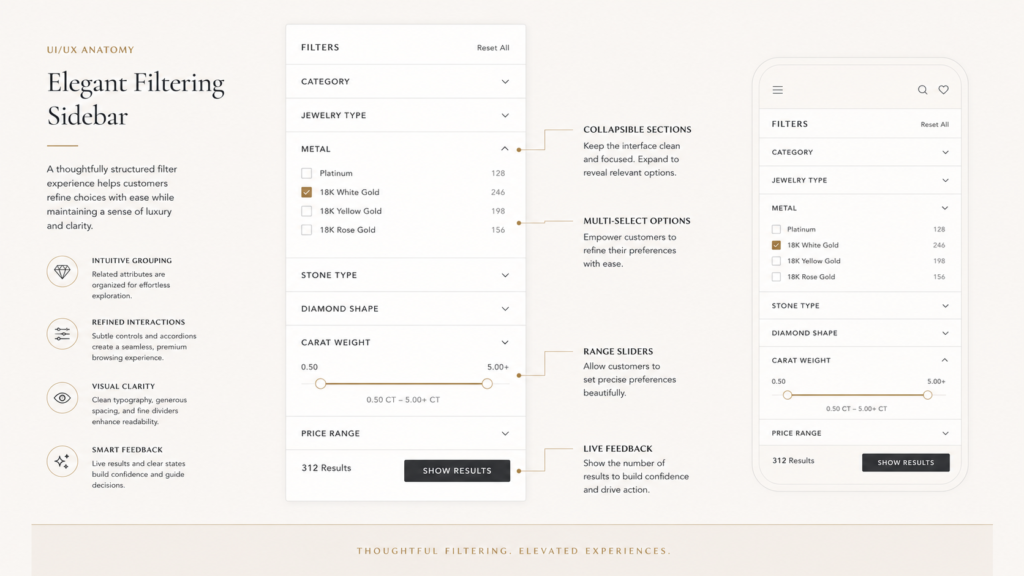
If a client is looking for “Art Deco-inspired engagement rings,” they shouldn’t have to scroll through 40 pages of generic bands. Your site structure should reflect how modern buyers think.
- Attribute-Based Filtering: Allow users to filter by gemstone, metal, style (Minimalist, Vintage, Brutalist), and occasion.
- The “Inspiration Gallery”: Create a searchable “Lookbook” of past custom jewelry pieces. This acts as a visual prompt for new commissions and helps with SEO for Jewelers by capturing long-tail search queries.
5. Leveraging Social Proof and “Sentiment Data”
High-ticket custom work carries high perceived risk. Social proof is the antidote to that hesitation.
- Client Diaries: Instead of a standard “5-star” review, feature a “Client Spotlight” where the buyer shares a photo of the piece in the real world (e.g., at the proposal or a milestone event).
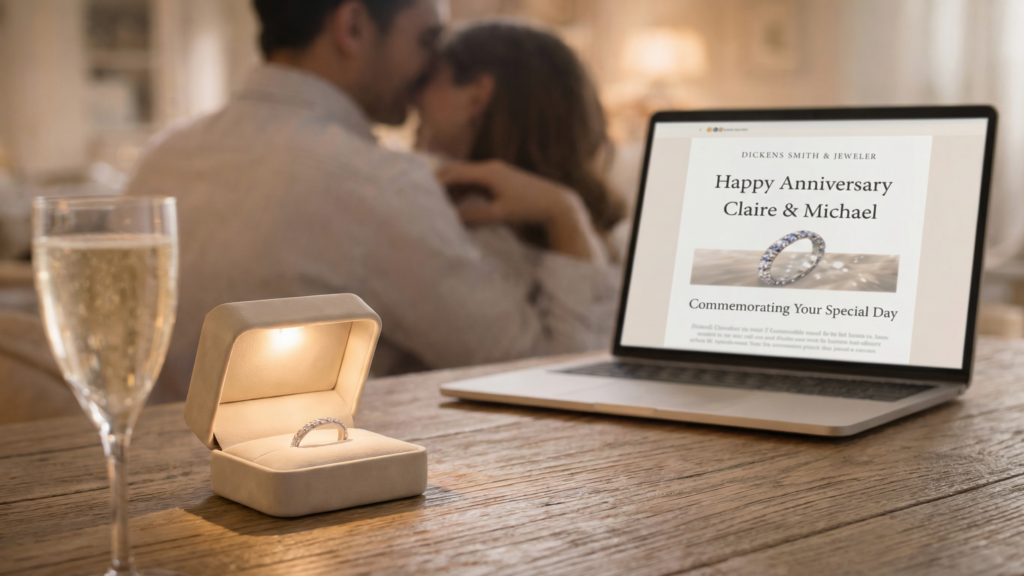
- Unboxing Content: Feature User-Generated Content (UGC) of the moment the client first opens their box. The genuine emotional reaction is the most powerful Digital Marketing Strategy you have.
6. Performance: Mobile-First and Core Web Vitals
In 2026, over 80% of initial jewelry discovery happens on a smartphone. If your high-resolution galleries cause your site to lag, you’ve lost the lead.
Your site must be optimized for speed and performance. A sluggish site signals an unpolished brand. Ensuring your “Core Web Vitals” are in the green is a non-negotiable part of Online Reputation Management.
Lead the Conversation with ARKTOP
Effectively showcasing custom jewelry pieces on your website is a delicate balance of high-art aesthetics and technical engineering. By moving beyond static galleries and embracing immersive storytelling, 3D visualization, and mobile-first performance, you position your brand as the definitive authority in the custom market.
At ARKTOP, we specialize in engineering the digital ecosystems that turn artisan craftsmanship into high-performance business assets. From conversion-focused SEO for Jewelers to immersive website design, we help you lead the conversation in the luxury world.
Schedule a strategy consultation with ARKTOP today and let’s craft a digital presence that reflects the precision of your work.
FAQ: Showcasing Custom Jewelry Pieces
1. Should I show prices for past custom pieces?
We recommend showing a “Starting at” price or a price range. This helps qualify leads and manages expectations for Jewelry Marketing Trends regarding metal and gemstone costs.
2. How many photos do I need per piece?
Aim for at least 5–7 high-res images: The hero shot (front), the side profile, the under-gallery, a “scale” shot (on a hand/neck), and a macro detail shot of the setting.
3. Does video really help sell jewelry?
Yes. In 2026, product pages with integrated video see a 35% higher conversion rate than those with static images alone.
4. How do I protect my custom designs from being copied?
While you can’t prevent every screenshot, using high-quality branded watermarks and emphasizing the “Artisan Story” makes it clear that the value is in your craftsmanship, not just the shape of the metal.
5. How can I improve my website’s ranking for custom jewelry?
Focus on SEO for Jewelers by creating content around “how-to” custom guides and using descriptive alt-text for all your custom jewelry images.