
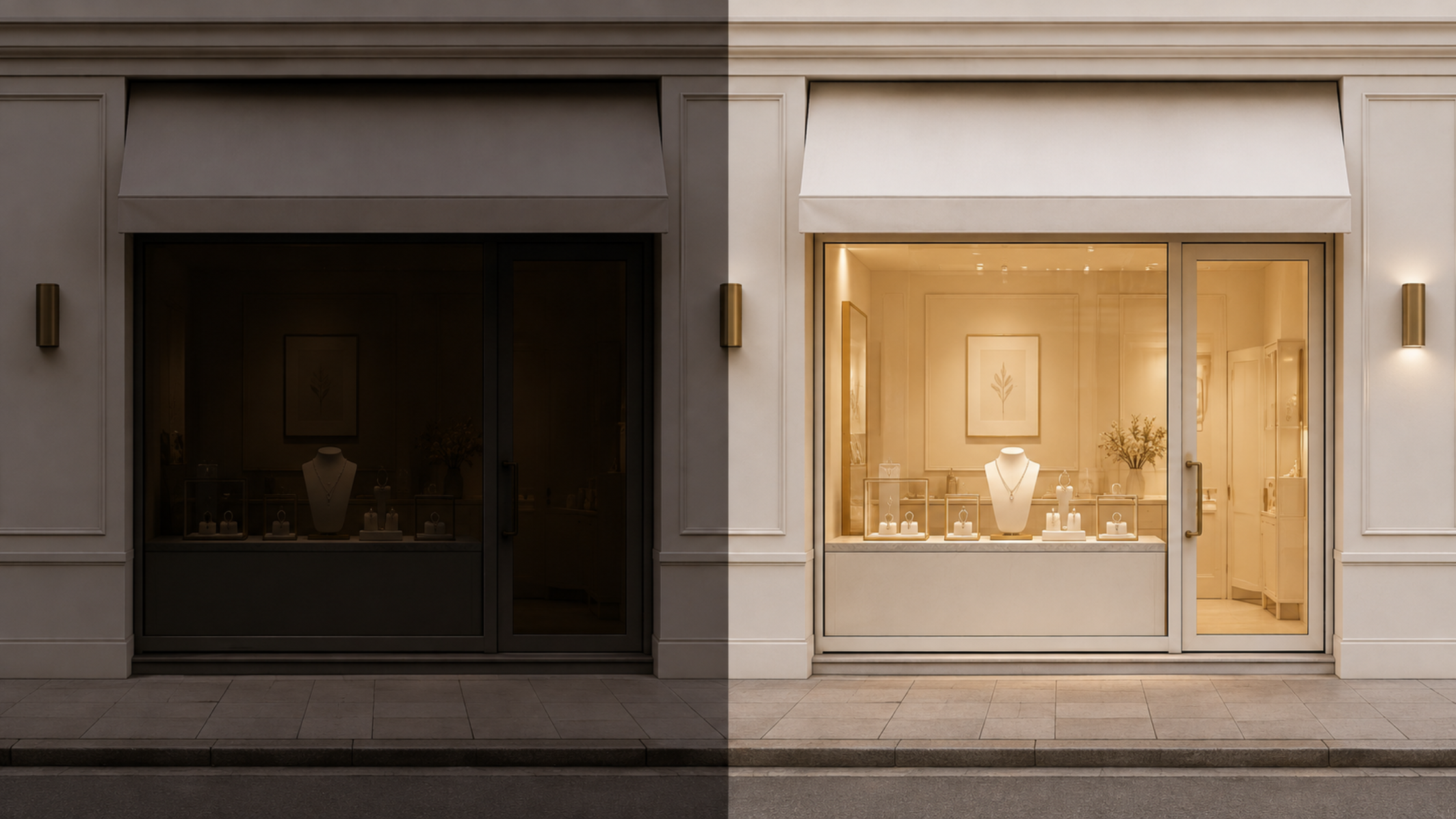
A couple walks past your storefront on a Saturday afternoon. They’ve already looked at three rings online, read a dozen reviews, and asked an AI assistant which jeweler near them handles custom work. By the time they reach your door, most of the decision is already made.
That’s the shift behind every digital marketing technique worth funding right now. The work isn’t about outspending the store down the street. It’s about being present, credible, and easy to find at each point where a buyer is quietly forming an opinion about you.
Below are eight digital marketing techniques for jewelry stores that consistently move revenue, along with a straightforward way to decide which one deserves your budget first. If you want the wider view of what belongs in a modern jewelry marketing stack, our 2026 tools and resources guide maps the whole thing.
1. Start With Local SEO, the Backbone of Jewelry Store Marketing
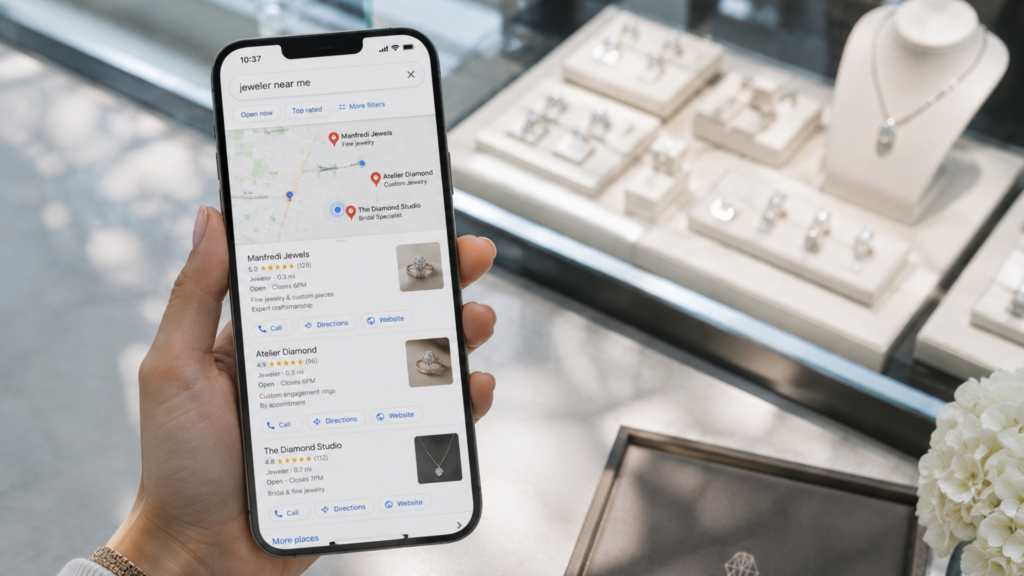
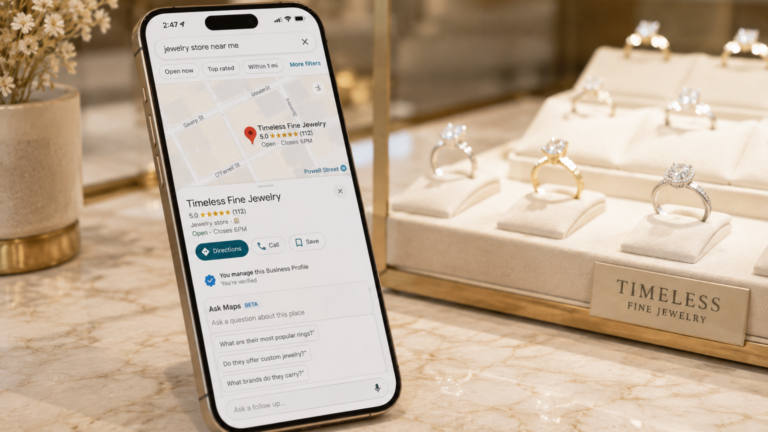
Most jewelry purchases still end in person. That makes local visibility the first place to put your money.
Google’s research found that 76% of people who search for something nearby on a smartphone visit a related business within a day. If your store isn’t surfacing in that moment, the visit goes somewhere else.
Focus on the fundamentals:
- Google Business Profile completeness: hours, services, appointment links, and categories that match what you actually sell
- Photo freshness: new showroom and product images added monthly, not once at setup
- Review velocity: a steady flow of recent reviews matters more than a high count from three years ago
- Local citations: consistent name, address, and phone number across every directory that lists you
- Location pages: one dedicated page per store, each with unique copy rather than a swapped city name
If you’re building this from the ground up, our breakdown of what local SEO involves covers the setup in order.
2. Build Organic Search Authority Around What Buyers Actually Search
Paid traffic stops the day you stop paying. Organic search keeps working.
For jewelers, the highest-value organic content sits at two ends of the buying journey. Early-stage questions build trust. Late-stage comparisons capture buyers who are close to purchasing.
Prioritize pages that answer:
- Buying guides tied to cut, clarity, metal type, and setting style
- Service explainers for repair, appraisal, and custom design
- Brand and collection pages that go deeper than a manufacturer feed
- Comparison content that helps a shopper choose between two options
Each page needs its own keyword focus, its own internal links, and a reason to exist beyond filling a content calendar.
When we rebuilt the on-page structure for a Rolex Official Jeweler, organic traffic rose 35% within six months not from publishing more, but from giving existing pages a clearer job. Our guide to SEO for jewelers covers that architecture in plain language.
3. Fix Site Speed Before You Spend Another Dollar on Traffic
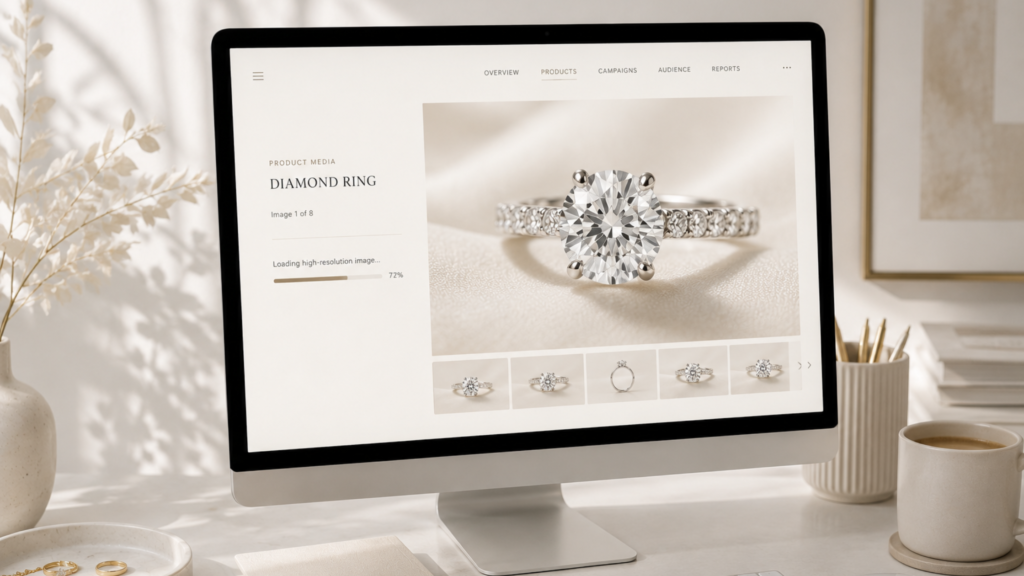
Traffic you’ve already paid for drains away on slow pages. Google’s Core Web Vitals now fold responsiveness directly into how your pages are assessed, and INP has replaced the older interaction metric. On image-heavy jewelry sites, that’s usually where the damage shows.
Jewelry sites are especially vulnerable because product photography is heavy by nature. Common fixes include:
- Serving images in modern formats at correctly sized dimensions
- Lazy loading anything below the fold
- Trimming third-party scripts, chat widgets, and tracking tags you no longer use
- Choosing hosting built for image-dense catalogs Shopify handles this well once a catalog starts scaling
Speed is one of the few improvements that lifts organic rankings, paid performance, and conversion rate at the same time. Here’s why website speed optimization deserves priority.
4. Use Google Ads to Reach High-Intent Jewelry Shoppers
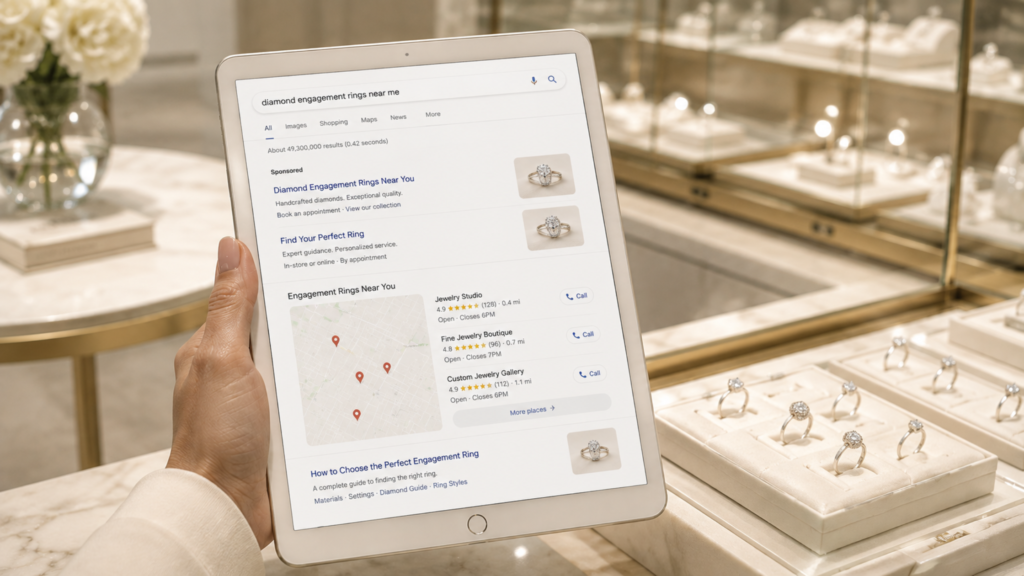
Google Ads returns are almost entirely a function of account structure. Two jewelers spending identical budgets can see completely different results.
The accounts that perform share a few traits:
- Tight campaign segmentation by category: bridal, watches, repair, and custom kept separate
- Disciplined negative keyword lists that filter out research-only and resale queries
- Shopping feeds with clean attributes, since incomplete product data suppresses impressions
- Location targeting matched to your real trade area, not a blanket radius
- Conversion tracking on appointments and calls, not just form fills
Search rewards specificity. A campaign built around your actual inventory will always outperform a broad one. Our Google Ads guide for jewelry brands walks through the build.
5. Run Paid Social That Builds Desire Before the Purchase
Search captures demand. Social creates it.
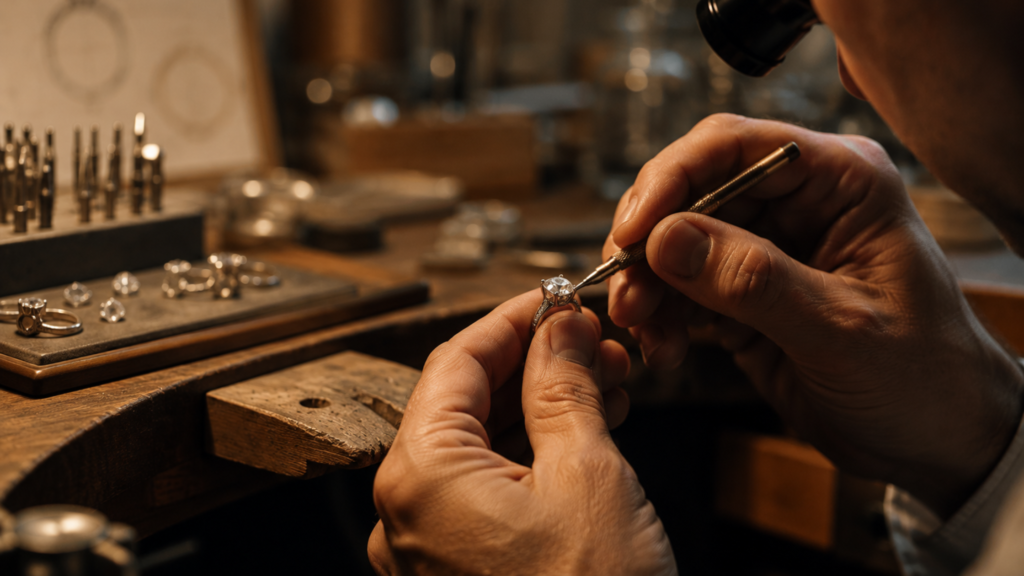
Meta remains among the most efficient places to introduce a collection, a designer, or a custom process to buyers who weren’t looking yet, and the creative carries more weight than the targeting. Lead with craftsmanship rather than discounts. Show the piece in motion and in wear rather than only on white. Use short-form video to earn reach and reserve static imagery for retargeting, where the buyer already knows who you are.
Keep the retargeting window tight, around 30 days, while intent is still warm. Exclude recent purchasers so budget goes toward building new demand instead of chasing people who already bought.
Paid social works as demand generation, not a discount broadcast. That distinction shapes how we approach luxury social media marketing.
6. Make Email the Quiet Engine of Your Jewelry Marketing Strategy
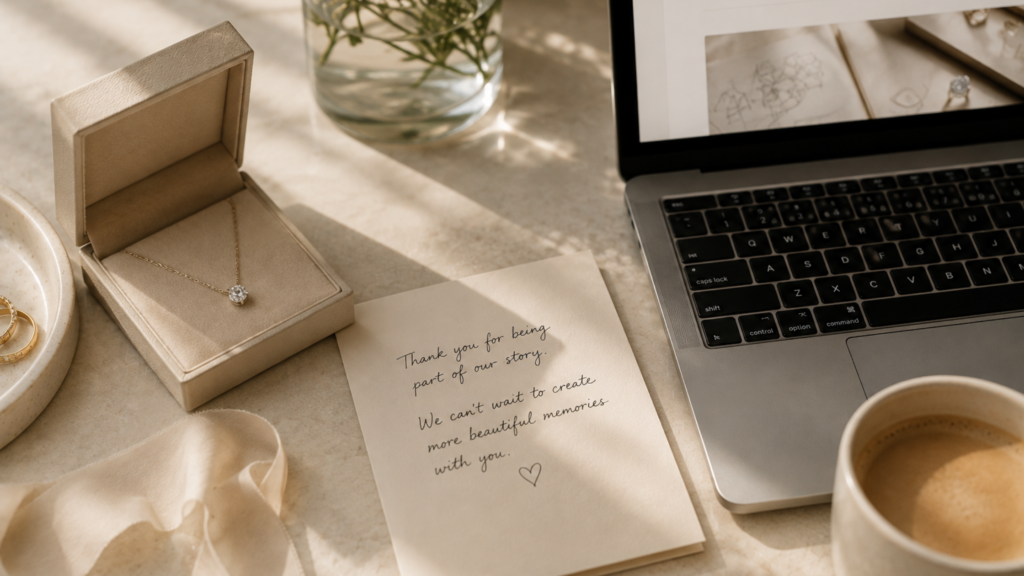
Email consistently outperforms every other digital channel on return, and it’s the only audience you own outright. No algorithm sits between you and your list.
The sequences that carry the most weight for jewelers:
- Post-purchase care with cleaning, insurance, and service reminders
- Anniversary and milestone triggers based on prior purchase dates
- Browse and cart recovery timed within 24 hours
- Appointment follow-up for consultations that didn’t close
- Seasonal campaigns built around bridal season, Mother’s Day, and Father’s Day
Build the sequences once and they run without you. See our approach to email marketing for jewelers for the flows that matter most.
7. Optimize for AI Search, the New Front Door for Jewelry Discovery
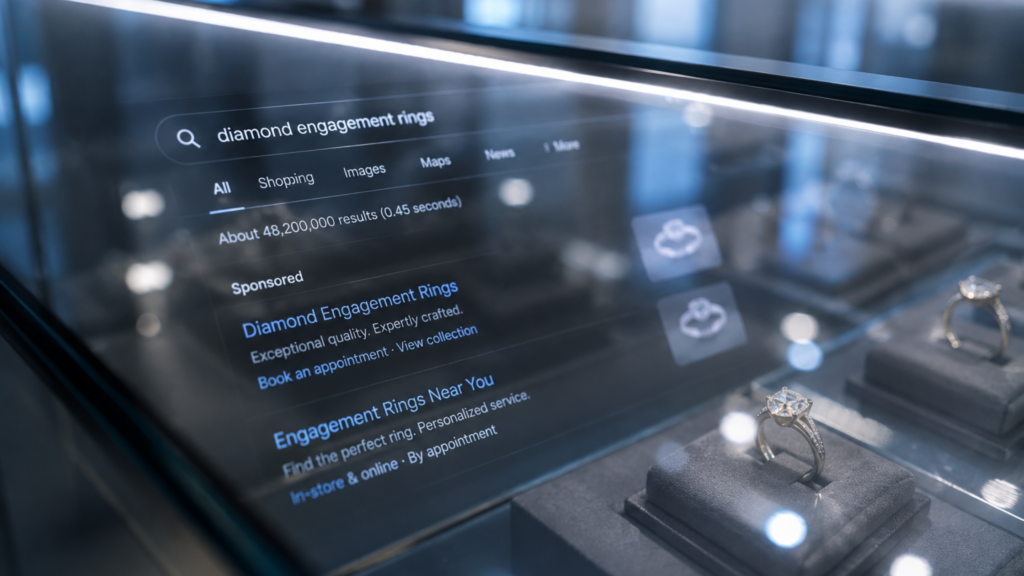
A growing share of buyers now start with ChatGPT, Perplexity, or Google’s AI Overviews rather than a search bar. Those systems can only recommend what they can read and verify.
What makes a jewelry site legible to AI:
- Schema markup on products, services, reviews, and business details
- Clear factual statements about pricing ranges, services, and policies
- Content that answers questions directly in the opening lines
- Consistent business information across the web
- Pages that render without requiring heavy scripts to load first
Being cited by an AI assistant works like a referral from a source the buyer already trusts. Our audit of whether your site is readable by AI covers what to check.
8. Measure Revenue, Not Vanity Metrics
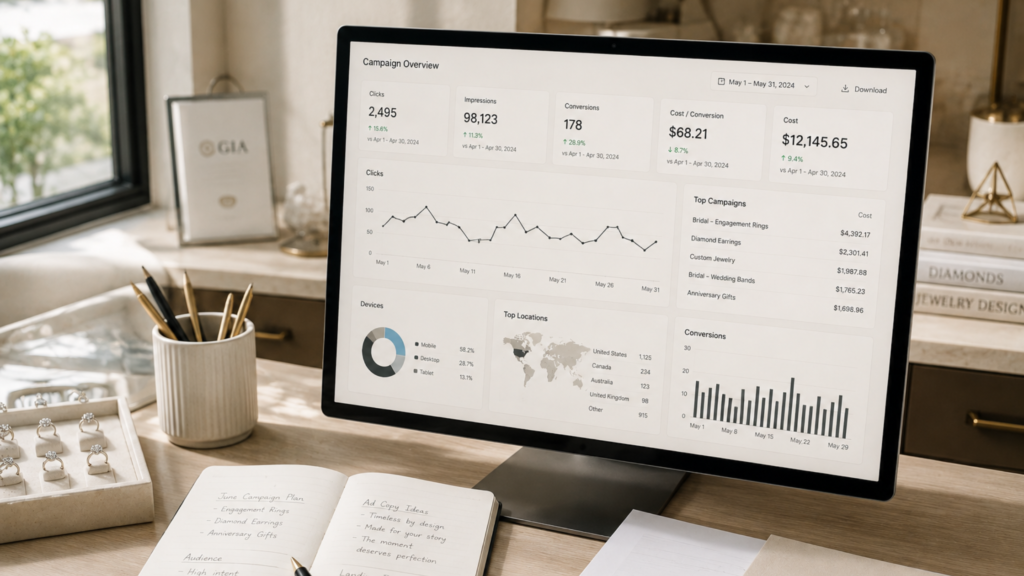
A jeweler books eleven appointments in a month and closes four. Which channel produced the four? Most stores can’t answer that, and it’s the reason budget keeps flowing toward whatever generated the most impressions.
Track the metrics tied to money:
- Cost per qualified lead by channel
- Appointment-to-sale conversion rate
- Average order value by traffic source
- Customer lifetime value across repeat buyers
- Assisted conversions, since jewelry rarely closes on first touch
Attribution in this category is genuinely difficult because so much of the journey ends in person. Our guide to measuring marketing ROI explains how to connect online activity to in-store revenue.
Digital Marketing Techniques Compared: What to Prioritize by Goal
| Technique | Best For | Time to Results | Cost Profile |
| Local SEO | Driving showroom visits | 1 to 3 months | Low, mostly time |
| Organic SEO | Compounding long-term traffic | 4 to 9 months | Moderate, ongoing |
| Site speed | Lifting conversion across all channels | Immediate | One-time build, light upkeep |
| Google Ads | Capturing ready-to-buy demand | Days | Higher, continuous |
| Paid social | Building awareness for new collections | 2 to 6 weeks | Moderate, continuous |
| Email marketing | Repeat purchases and retention | 30 to 60 days | Low, high return |
| AI search visibility | Emerging discovery traffic | 2 to 4 months | Moderate, technical |
| Analytics and tracking | Deciding where budget goes next | Immediate | Low, foundational |
If your budget only covers two techniques this quarter, start with local SEO and email. They cost the least and touch the buyers closest to purchasing.
Choosing Your Next Move in Jewelry Store Marketing
The jewelers gaining ground in 2026 aren’t running more campaigns. They’re running fewer, better ones, connected to each other and measured against revenue.
Pick the technique that closes the widest gap in your current setup. Build it properly. Then add the next one.
Most jewelers already know which of these eight is weakest. The harder question is what fixing it actually takes. We’ve done this work for Hamra Jewelers, for Rolex Official Jewelers, and for independent retailers across the country. Explore our jewelry marketing services, or schedule a consultation and we’ll show you where your best opportunity sits.
Frequently Asked Questions
What are the most effective digital marketing techniques for jewelry stores?
Local SEO, organic search content, Google Ads, paid social, and email marketing deliver the most consistent returns for jewelry retailers. Local SEO and email tend to produce results fastest at the lowest cost. Paid search works best once your product feed and conversion tracking are properly configured.
How much should a jewelry store spend on digital marketing?
Most independent jewelers allocate between 5% and 10% of annual revenue to marketing, with roughly half of that going to digital channels. Stores in competitive metro markets often sit at the higher end. The right figure depends on your growth targets and how much of your current revenue comes from repeat buyers.
How long does digital marketing take to work for a jewelry store?
Paid channels can generate inquiries within days of launch. Local SEO typically shows movement in one to three months, while broader organic SEO takes four to nine months to compound. Email automation usually starts producing measurable revenue within the first 60 days.
Is SEO or paid advertising better for jewelry stores?
They solve different problems. Paid advertising captures buyers who are searching right now, and SEO builds visibility that keeps working after the spend stops. Most successful jewelry retailers run both, using paid search to fund growth while organic authority builds underneath it.
How do jewelry stores get found in AI search results?
AI assistants pull from sites with clean schema markup, consistent business information, and content that answers questions directly. Adding product and local business schema, keeping your details identical across directories, and writing clear factual answers all improve your chances of being cited.
Do jewelry stores still need social media if they run Google Ads?
Yes, because the two channels serve different stages. Google Ads reaches shoppers who already know what they want, while social media introduces your craftsmanship to buyers earlier
More from the blog
Your brand deserves a partner fluent in luxury.
A 30 minute strategy call. We come with a first read of your site, search, and ads.